Tuesday is the day the nominations come out. As per last year, here are my predictions for this year's nominations. I don't think there are too many surprises, this year. Most of the winners will likely be as they should - except where the huge Avatar field distorts the selections.
Original Screenplay
James Cameron - Avatar
Pedro Almodovar - Broken Embraces
Nancy Myers - It's Complicated
Mark Boal - The Hurt Locker
Quentin Tarantino - Inglourious Basterds
will win: James Cameron, Avatar
should win: Mark Boal, The Hurt Locker
Adapted Screenplay
Nick Hornby - An Education
Wes Anderson - Fantastic Mr. Fox
Joe Penhall - The Road
Geoffrey Fletcher - Precious
Jason Reitman & Sheldon Turner - Up in the Air
will win: Geoffrey Fletcher, Precious
should win: Jason Reitman & Sheldon Turner, Up in the Air
Directing
James Cameron - Avatar
Lone Scherfig - An Education
Wes Anderson - Fantastic Mr. Fox
Katheryn Bigelow - The Hurt Locker
The Cohen Brothers - A Serious Man
will win: James Cameron, Avatar
should win: Katheryn Begelow, The Hurt Locker
Supporting Actress
Zoey Saldana - Avatar
Melanie Laurent - Inglourious Basterds
Penelope Cruz - Nine
Mo'Nique - Precious
Anna Kendrick - Up in the Air
will win: Mo'Nique, Precious
should win: Mo'Nique, Precious
Supporting Actor
Peter Sarsgaard - An Education
Christoph Waltz - Inglourious Basterds
Anthony Mackie - The Hurt Locker
Stanley Tucci - Julie and Julia
Rupert Friend - The Young Victoria
will win: Christoph Waltz, Inglourious Basterds
should win: Christoph Waltz, Inglourious Basterds
Best Actress
Hillary Swank - Amelia
Penelope Cruz - Broken Embraces
Meryl Streep - Julie and Julia
Carie Mulligan - An Education
Emily Blunt - The Young Victoria
will win - Emily Blunt, The Young Victoria
should win - Carie Mulligan, An Education
Best Actor
Sam Rockwell - Moon
Viggo Mortensen - The Road
Colin Firth - A Single Man
Robert Downey Jr. - Sherlock Holmes
George Clooney - Up in the Air
will win - George Clooney, Up in the Air
should win - Colin Firth, A Single Man
Best Film
With ten pictures to choose from this year, this could be a wide-open, zany category. Here's my shot at the ten we're most likely to see.
Avatar
An Education
A Serious Man
Broken Embraces
Fantastic Mr. Fox
The Hurt Locker
Inglourious Basterds
The Road
The Young Victoria
Up In the Air
will win: Avatar
should win: Up in the Air
Sunday, January 31, 2010


Saturday, January 23, 2010
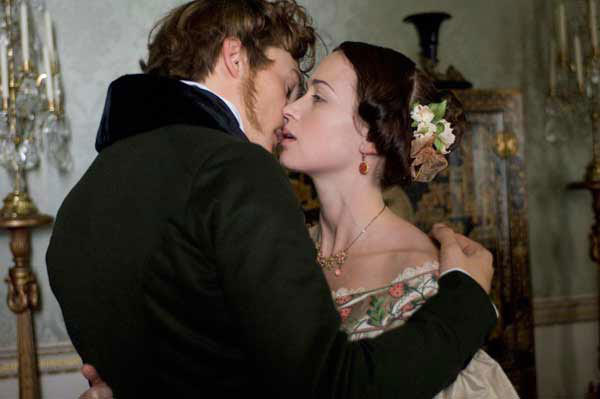
The Young Victoria: A Royal Love Story
 W
 ith two Elizabeth movies, Helen Mirren's The Queen, and a successful Showtime series about The Tudors, it seems a mini-genre has been created about the English royals and their saucy comings and goings and political intrigue; and especially about the way that various men close to power manipulate their Queens, and vice versa.
The latest entry in this genre, The Young Victoria - staring a perfectly cast Emily Blunt as the teenage Victoria, and Rupert Friend as her German suitor, Prince Albert - turns out to be a surprisingly tender and moving rendition of the form.
In the Victorian age (1837 - 1901) we're placed somewhere between the bloody intrigue of Elizabeth/The Tudors and the modern polite protocols of today's British Queen, so don't expect any heads to roll or battles to be raged in this outing. In fact, the Victorian era was Britain's high point of peace and prosperity, and the filmmakers are actually quite sly to make a film about the young queen rather than the old, for this is a tale of young hearts and true desire, yet while using the name of a woman ultimately associated with an age of fastidious virtue.
The young Victoria - the little girl being raised as a princess and heir to the throne in the early 1800's - is actually a precocious, lively spirit who is trapped herself in a world of repression by an overprotective mother and her scheming minister, Sir John Conroy, who wishes Victoria to sign the order that would make him official regent upon the death of the King. Victoria stubbornly refuses, innately distrusting Conroy, and knowing that her future is at stake.
It's not too difficult to discern Conroy's character given the way he treats Victoria's dog: variously coddling or kicking depending upon his mood. The dog becomes a stand-in for Victoria herself (a nicely used form of metonymy), and it may be with you - as it was with me - that the affection for dogs in this movie eventually softens your heart, and draws you even closer in to the character's fears and desires.
Even though they are royals, the schemes by various Kings and Uncles to have their way with Victoria's royal powers are portrayed with the kind of boisterous of feuding families - replete with birthday-party embarrassments and nuptial snubs. Only one man, it seems, has Victoria's true interests in mind. That man is the young, handsome Prince Albert, who even as he wins Victoria's heart, still must convince her that he's also worthy of her trust.
It actually surprised me, in the end, how the movie takes a turn away from historical melodrama towards passionate love story. This Queen is perhaps more than those that have come before someone our modern selves can relate to: a younger sister, perhaps, who must learn how to take her place in a dangerous world amongst self-interested family, and decipher with whom she can fully open her heart. Blunt wins us over into the dilemma of the character (as does Rupert Friend as Prince Albert), and even if the movie doesn't quite follow the official history, the ending becomes surprisingly moving, as any story of young people finding true love, told with feeling and felicity, ultimately can be.
It's interesting, then, that a movie genre with such a background of intrigue, social station, and politics ultimately becomes about something else: about the dynamics of young love, and how new lovers, who may be, in fact, the most inspired people on earth, can support the best in each other. It's a bit of a turn from where we started, with plots and contrivances to control the heir and manipulate the throne. But then, perhaps this is like the drift of the Victorian age itself, becoming less about power than about symbolism: and in the case of Victoria and Albert, symbolism for finding the goodness in other people, and using our station to improve the world.
And yes, I admit, I did get weepy in the end. But to be honest, I couldn't tell whether it was the love story, or simply sadness at how our current political life, dull and ruthless as it is, so misses such inspiring figureheads: both their stubborn courage, and their bright idealism.
Saturday, January 16, 2010
It's Complicated: William Sonoma Goes Hollywood

 The past few weeks, there's been a corporate fight between Cablevision (my local cable channel) and Scripts (the producers of Home and Garden TV and the Travel Channel) that has resulted in HGTV being off the air.
It's been going on long enough that apparently my inner home-show gene activated its survival mechanism and forced me out to see It's Complicated, a barely concocted comedy for women of a certain age, staring Meryl Streep (as Jane) and Alec Baldwin (as Jake) as a divorced couple in their late fifties who discover they still have the hots for each other.
T
 he plot of this inoffensive enough affair is of little consequence, but I do must say that the designer Santa-Barbara style house is fabulous, the flowers perfectly arranged, and food photography worthy of a cover spot on Martha Stewart Living. If William Sonoma were launching a cable channel, this would be its flagship film.
Until I saw this movie, I'd forgotten about the word "yuppie," but there doesn't seem a better adjective that one can trot out from the dictionary of Eighties slang than this to describe this languid affair. It's not so much that the couple in the film both exude the self-absorbed happy-peppy self-indulgence and pre-washed wealth of that over-exposed generation (Alec Baldwin's constant boyish celebration of his naked, unhealthy girth, rubbed in our faces with deluded intimations of supposed sexiness, strikes me as the perfect Yuppie metaphor); it's that the entire production has the feeling of mid-Eighties soap opera of the Dallas/Dynasty variety.
In some cases, the jokes are better (there's a nice zany bit about Jane and Jake being surreptitiously observed by their son-in-law while meeting for a quick poke at a local hotel, as well as a humorously staged scene of pot-induced dating revelations when Jane and her latest boyfriend - Alex, played with sleepy understatement by Steve Martin - and Jake and his wife attend a graduation party for their son). These bits are funny (I laughed, despite myself) and there's no doubt that the intended audience, women in their fifties and sixties, were thoroughly enjoying themselves.
The story is humorous enough when it needs to be, it's just that the self-satisfied wealth (Jane, who lives in a seaside Santa Barbara paradise worth - at least - several million buckaroos, find hers kitchen "limiting" and spends most of the movie planning an addition) and the oblivious narcissism of the characters (she is so out of touch with the world around her that her children are mere happy props in her home style decorations, and she needs a psychiatrist to tell her what to feel) made me want to hate this film, most of the time. Jane and Jake are essentially spoiled well-off sixty-year-old teenagers (there's no way she should could afford that house selling five dollar croissants at her Whole-Foods-ish boutique store): clearly this movie was in the can well before the economy crashed, since it now seems to come from a completely alien world of fantasy upper-middle-class luxury, as if that's the most relevant thing on people's minds.
There's no point summarizing the plot: it goes where you expect. Jane and Jake threaten to get back together, although there's the complicating inconveniences of a new boyfriend for Jane and an existing young wife and kid for Jake, until Jane wises up and realizes...I don't know, that that getting back with Jake wouldn't be complicated enough? That the movie needs a third act? It doesn't much matter.
Part of the problem may be Streep, who is a brilliant dramatic actress but imbues Jane with so much complex interiority that we take her predicament too seriously. Someone like Diane Keaton (who basically performed the same role in Nancy Meyer's earlier version of this story, Something's Gotta Give) would have been more over-the-top, with a heightened comedic reality that might have softened the yuppie ostentation a bit. Watching Streep pick perfect ripe tomatoes in her overstuffed, manicured garden while analyzing her affair with ex-husband Jake is a cliche almost to the point of creepiness: the scene had me ready to find a Saturday-Night-Live actor burst into the frame at any moment to make some self-aware postmodern remark about Jakob Krutzfeld disease or Haitian refugees or something else equally deflating. But unfortunately, that didn't happen.
I may be being too hard on this film. It's not like any animals were killed (though a few more cute dogs might have heightened my enjoyment), it's competently directed (even if Jane and Jake's three kids bounce and hug like Tellitubies every time they enter a scene), and it's certainly passable enough - and probably enjoyable, if you're the target demographic for stuff like this. If you're not, however, don't say I didn't warn you.
Friday, January 15, 2010
Broken Embraces: Almodóvar Matures


For the first hour of Broken Embraces, the latest soap opera from the flamboyant and prolific Spanish director Pedro Almodóvar, you feel you are watching the director’s best film yet. At turns intriguing, surprising, mysterious, and human, the movie opens with an insight into character, memory, and personal history that’s keenly observant to the point of elevating this material above anything that has come from Almodóvar before.
Mateo Blanca (who has, for some mysterious reason, assumed an alias of “Harry Caine”) is a blind screenplay writer, who busies himself picking up sympathetic women on the streets to pass the time when he’s not being consumed by his latest inspiration. (Come to think of it, that could well be a straight version of our director, Almodóvar.) He’s being assisted in his writing life through the attentive care of a woman and younger man (Judit and Diego) – as we later find out, the woman is his former production manager, the young man her son. One fateful morning, a young man named Ray X shows up at Harry’s door, demanding to be seen. Ray X apparently knows much more about Harry’s life than a person should, and is threatening to write some kind of film, vaguely related to Harry’s past.
But of course, the star name in this movie is Penelope Cruz: who plays the character of Lena. Cruz doesn’t show up in the film until this moment, when Harry pulls out a photograph of her from his drawer to show it to his spooky, inquisitive visitor. But she is, indeed, the subject of the movie: Harry’s lost love, the tale of which we find out through an extensive flashback as Harry relates the story to the young Diego while he’s in the hospital, recovering from an unintentional overdose of GMBH.
The story that Harry relates about Lena – including her possessive boyfriend, the head of a powerful bank, as well as Ray X, the spooky young hopeful writer – eventually intersects with Judit and Diego, Harry’s devoted friends (one of whom has a fateful confession to make), and all the threads of the tale eventually come together as superb melodrama.
As my companion in the theater noted, Almodóvar is a kind of Spanish version of Woody Allen – providing knowing set pieces of lives of artistic import and modern relationships. Almodóvar just provides a few twists on the typical Woody Allen approach: more gay, more Spanish, more melodramatic, and more modern. That makes him more interesting – willing to fly a bit higher, and take a few more dramatic risks – and yet, like Woody, Almodóvar insists on bringing his films, at the end, back down to a simple tale of “slice of life” and the quiet desperations of his middle class characters.
We can see the tightly controlled tone of the first half of the movie loosening up as Almodóvar navigates his way to the end – jumping between heightened pathos and incidental slice-of-life. This modulation of high/low is a signature Almodóvar style that, at first, he seemed to be growing out of here. Though that’s a bit disappointing, the ending makes sense of what’s come before in a satisfying enough way: Ray X eventually provides the missing part of the story that Harry has been searching for: what actually happened that night that Harry (then Mateo) went blind, and lost Lena forever.
There are a few things I think Almodóvar might have done that might have tied up his themes a bit more neatly: for instance, why does Diego not hide from Harry, as has been hidden from him, the reality of that fateful moment, which has been captured, in delicious irony, on film? It seems an obvious opportunity to plumb Diego’s character, and its relationship to Mateo, that Almodóvar has missed. After all, in a story about history, memory, and innocence, the next generation is what an audience comes to care most about - and indeed, represents the concerns of a mature story-teller. Instead, Almodóvar seems to have become enamored of his recreation of his earlier movie – the film-within-a-film that’s his re-telling of Women of the Verge – which is a neat trick...but the kind of thing we might expect from a younger director, and not nearly as important to the story as the boy and his future has become.
Which is why Almodóvar’s focus in the last half hour of the film (after the momentous confessions begin) seems to be off – broader, scattered, with the humorous irony of his early films but lacking the confidence and subtly we’ve been treated to until this point. In the end, Broken Embraces is about how a movie director chooses to perceive – and edit – the painful and pleasurable moments of the past, as well as how we relive our histories through the lives around us. Almodóvar manages to keep that delicate tone in balance for most of the movie, and just a few more delicate scenes at the end to tie it all together would have made this a mature masterpiece, indeed.
Thursday, January 7, 2010
Sherlock Holmes: Studio Sturm und Drang

 Someone at Warner Brothers gave director Guy Ritchie a multi-million dollar budget and the script to Sherlock Holmes to create a holiday super-movie, and Ritchie did what one would expect: he created a Guy Ritchie movie, only with bigger stars and badder special effects. For some people, I suppose, that isn't such a bad thing, though the result bears little resemblance to a story by Arthur Conan Doyle.
To be fair, the plot to the movie was conceived before Ritchie came on board, so one can little blame him for the uninspiring story line of a British lord (played with all the expected deadpan seriousness by Mark Strong) who dabbles in the dark arts and escapes hangman's row to apparently come back from the dead in order to unleash the usual bits of death and destruction, in the process bedeviling the fact-obsessed Holmes (Robert Downey Jr.) and his intrepid sidekick, doctor Watson (Jude Law). There's little original here in the storyline of mystical occultism being faced down by twentieth century rational deduction, though the studio would apparently wish it so.
Which isn't to say that there isn't some outstanding talent behind the film. Ritchie, of course, brings his rough-and-tumble British low-life sensibility to the movie, imagining Holmes as a kind of roguish, professional boxing, deductive savant (effectively turning him into the kind of super-hero he probably wishes he had helming his earlier, lower budget outings, which were so much more effective for their simple roguishness and lack of high-tech pomposity). Holmes is effectively able to deduce within milliseconds on the fly and in stop-time slow motion (much as, I suppose, Stephen Hawkings is capable of imagining the entire mathematics of the birth of the universe in his head), though he lacks the basic social skills necessary to conduct a simple dinner conversation with Watson's new fiance. That's not to mention his uncanny James-Bond-like ability to disable even the most imposing of combatants (or five) with a few critically placed karate chops. That any of this is potentially possible is entirely besides the point: the point is whether Robert Downey Junior can turn the character into an entertaining spectacle of twitches, ticks, and nervous recitations for an hour and a half, which he effective does, earning, once again, my admiration for his most recent abilities (see Iron Man and Tropic Thunder).
Jude Law also handles his own as Downey's counterpart, keeping the toy of Holmes wound up as necessary and battling his own twin demons of gambling and an entirely uninteresting courtship with a superfluous lady friend (whose only purpose in the movie seems to be to keep us from fully realizing the entirely homo-attractive underpinnings of the Holmes/Watson relationship).
One sometimes gets lucky when one has a studio tent-pole movie budget to work with, and Ritchie basically does: his sound crew does an amazing job with the sound editing (expect the movie to be nominated here), and the art and set design is right-on, and no more clearly expressed than in the end credits, which are certainly the most beautiful part of the movie and the best credits seen in film since Lemony Snicket (if they nominated credits for Oscars, this movie would be a shoe in this year).
And yes, celebrating Downey's performance and the sound editing and ending credits of the film does mean that the rest of this baggy bundle has little to recommend it, but I do think that talent, even if found stuffed around the edges of a bloated studio popcorn flick, deserves its due. The dedication from the talented below-the-line crafts people - who create the rickety sets and the slow-motion explosions - is what basically keeps this movie afloat, delivering its ten dollars worth of holiday distraction.
Clearly, this is a movie conceived by studio producers (if one credits the Wikipedia article), and this is made no more clear than in the decision to hide the film's potentially most interesting villian - Moriarty, Holme's nemesis - entirely from view, as a set up for potential sequels. An outing between Downey's fidgety Holmes and the cool, chalky calculations of a Professor Moriarty might, indeed, be interesting. The only problem is that by the time we've gotten through this initial incarnation of the Holmes character, it's hard to know whether or not to care. A Holmes conceived as a socially inept detective-savant is an interesting idea, but without the incisive humor of, say, Jim Parson's Sheldon on CBS's "Big Bang Theory", such a character can get tiring, fast. If Warner Brothers does decide to take this property out for another outing, we'll need both a more original villain from the supposedly cleverer-than-Holmes Moriarty, as well as a little more well-placed humor.
Sunday, January 3, 2010
Nine: A Play on Italian Cinema

 What can I say about Rob Marshall's film version of the Broadway musical Nine other than, I wish he had pulled it off...and I wish I had seen the original play.
Nine, the play, is loosely based on the life of Federico Felllini - the cinematic auteur most associated with Italian neo-realism and, apparently, a womanizer who also suffered from depression, he was the director of the scandalous (for its time) La Dolce Vita. He also wrote the Oscar-nominated 8 1/2, a semi-autobiographical tour-de-force about a director named Guido with writer's block, which also happens to be the story underlying Nine.
In the movie Nine, the Italian director of note is Guido Contini, played with introspective intensity by Daniel Day-Lewis. Surrounding Guido is a bevvy of his women - I suppose you might call it the classical constellation of genius womanizing director's women, including Mother, Madonna (in the form of his set director), wife, mistress, celebrity, fan, and whore - played by a top-name cast, including, respectively, Sophia Lauren, Judy Dench, Marion Cotillard, Penelope Cruz, Nicole Kidman, Kate Hudson, and singing sensation, Fergie. This is the same constellation we saw in Bob Fosse's All That Jazz, and really is a staple of both French new-wave and Italian neo-realist cinema.
Unfortunately, not all these actors are suited to bring this Broadway performance to the screen. And while Marshall's technique of interspersing filmic reality with a dream "Broadway" world worked so well to make the movie Chicago a success, it undermines the effect of Nine, dragging it down from what might otherwise have been a great and memorable production.
Because this movie really had more potential to be great than I think a lot of critics are giving it credit for (my favorite quip is MaryAnn Johanson saying that "Nine is to Italian cinema what Olive Garden is to Italian food"), let's address those two problems one at a time.
First, the casting. As in Chicago, Marshall has culled together a cast of some actors who can sing and dance (Hudson, Cruz), and some who really can't (Day-Lewis, Cotillard...and, my God, Lauren). Unfortunately, the songs in Nine aren't as brilliant as Fosse's Chicago - much more classical Broadway, and with a few clunky expository numbers - and therefore, really require talent to pull off. The movie skates along, starting with a clunker opening number from Day-Lewis and a few other big clunkers along the way, occasionally hitting patches of great performances (I finally woke up when Cruz sings "A Call from the Vatican", Fergie's "Be Italian" has the benefit of at least being a good song, and Hudson's "Cinema Italiano" is the highlight of the movie).
This would all be fine, if the serious actors who were unable to sing were at least giving the correct performances. Unfortunately, the actors treat the material as if it were serious drama - with both Day-Lewis and Cotillard giving small, intimate portrayals of lives being shattered - when what we need to have are big, outrageous performances that support the movie music. One might forgive Marshall for thinking that Day-Lewis was his man to provide an out sized performance of a rapacious, Italian womanizer (after all, his performances in both Gangs of New York and There will be Blood were huge). I don't know if the fault lies in the performer of the director, here, but Day-Lewis interprets this character via the intimate mumblings of a depressed director suffering a mental collapse, all curled in on himself and shrinking away from his own universe. That's exactly the wrong interpretation for this movie: what we need is a huge appetite (as we have from Roy Scheider in All That Jazz, or say, Peter O'Toole in The Stunt Man), a man whose actions are larger than life, who's charisma makes us understand why women flock to him, and who can carry the fantasy and justify the elaborate numbers. There's even a number - "Take It All," sung by Cotillard as Luisa Contini, Guido's wife - that's supposed to be the emotional apex of the movie, where Luisa laments how her husband is all appetite, and has completely consumed her, as she strips off her clothes in a fantasized strip-tease in front of him and a crowd of lusting men. Given the performances from Day-Lewis and Cotillard, however, the number makes no sense, since Guido hasn't been consuming life but shrinking away from it. It's a good number, and had the movie set it up correctly, could have been a powerful climax to the film, as Luisa strips herself naked in her attempt to break through the bubble of attention surrounding the self-absorbed director. But as performed, with Guido self-destructing and Luisa more angry than desirous, the number lacks resonance.
Throughout the movie, Day-Lewis's performance leaves a black whole at the center of the film, which becomes very hard for the other actors to fill, and like harsh lighting, is completely unflattering - almost to the point of embarrassment - on the weaker song-and-dance performers (Sophia Lauren and Nicole Kidman, in particular); while natural stars like Cruz and Hudson are able to pull off fabulous numbers in their own right. That's a harsh criticism to make of a brilliant actor like Day-Lewis, but the problem isn't the acting so much as the interpretation. Which brings us to the other big problem with the film.
Which is that this is a movie of a play about cinema, but unfortunately, Marshall missed, here, the critical metaphor of the play. Instead, he seems to have concluded that the formula for Chicago would work just fine here: treat the drama as reality, and the musical numbers as a fantasy inside the main character's head (in this case, the fantasy of the movie he's trying to make in his head). This approach leads Marshall to apply some very fine, neo-realistic techniques to the "reality" portions (one thinks of the direction of the boys on the beach in the "Be Italian" number, which is done with outstanding neo-realistic cinematography). In fact, the "realistic" portions of the film become a kind of hodge-podge tribute to Italian neo-realistic film techniques. Where this works best is in the fantasy numbers - like Hudson's "Cinema Italiano," where technique and performance come together brilliantly. However, in the rest of the movie, the reality of the technique undermines the high irony that gives the musical numbers their pleasure.
In other words, the animating idea behind the play, which makes the play interesting (I would think), is the fun ways that one can interpret the form of Italian neo-realism for the stage. Such interpretation involves taking the neo-realistic cinematic techniques out of the story and highlighting them as techniques for the stage audience, thus letting the audience enjoy the sensation of being so aware of film style (as aware as the director must be... and possibly why he has writer's block).
Marshall has taken those techniques and simply put them back into the form of his cinema. Which is to say that he simply re-creates the neo-realist style, leaving us without the heightened irony we would get from seeing it created in the stage play (the only place we get that irony is in the Hudson number).
This is unfortunate, since the style is copied by the unit directors in the film so assiduously. But it's copied too well - there's too little ironic highlighting of the style against the story for the audience to enjoy. It might have been better to inverse the formula: to film the story as a stage play, and make the cinematic moments be the moments of flights of fancy inside the director's head. That at least would have highlighted the cinematic techniques, and possibly led Marshall to find a central metaphor for his film.
Which, ultimately, is what's missing here, and why the movie doesn't seem to hang together. It's unfortunate that the movie opens with Guido lamenting how difficult it is to make a movie - how it's sometimes impossible for all the pieces to come together, suffused with the essential magic that makes them a whole - since this is the same problem this movie suffers from (which is why self-reference is always such a dangerous game).
What ultimately needs to make Guido's movie hang together, of course, is the force of his imagination. That force needs to be illustrated well for a movie like this to succeed - both for the characters who've fallen for him in the story - and those of us watching in the audience. The pieces are all here, but unfortunately, this time, the illustration is all wrong. I thoroughly enjoyed the premise of the story, and the idea of celebrating the high art of Italian neo-realism as a kind of low-brow Broadway kitch, and the idea of seeing a constellation of beautiful actresses perform the numbers with ironic style and bravura. Marshall just didn't make that movie, no matter how much I wish he had.
Monday, December 28, 2009
Top Ten Movies of the 2000's
As 2009 winds to a close, it seems fitting to review the top 10 movies of the past 10 years. This has been a good decade for films, as the mini-majors have received significant budgets to create lavish dramas from great theater and literature; as a new generation of directors (Guillermo del Toro, Alfonso Cuarón, Ang Lee, Peter Jackson, the Cohen Brothers, Quintin Tarantino, Jason Reitman, Paul Thomas Anderson, Rob Marshal) have matured into leading artists of our day; as the dramatic events of September 11th and the wars in Iraq and Afghanistan influenced our culture to take a more serious turn.
Here, then are my nominations for the best films of the decade - it was a difficult selection, so I'd love to hear thoughts from readers on any other films that you think should make the list, and why.
 10. Children of Men, 2006
This amazing piece of cinema (the twenty minute single take toward the end should go on record as the most amazingly staged camera move ever) relies not on special effects, but on the staging and impact of a semi-futuristic story about the inability of the human race to procreate, a world consumed by endless war, and one man's attempt to save a baby. Delivers a knockout, gut-reeling metaphor on the cruelties of civilization that we haven't seen since movies like Clockwork Orange or Dr. Strangelove.
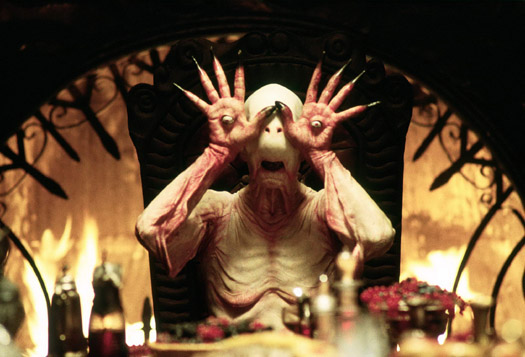 9. Pan's Labyrinth, 2006
Like Cuarón's Children of Men, del Toro's beautiful costume drama about a little girl who fantasizes escape from the clutches of a dictator during the Spanish civil war is an elaborately staged metaphor for a world consumed by cruelty and war, and goes straight for a guttural revelation at the end. Both movies are wonderful stories of innocence and darkness, but Pan's Labyrinth also creates an entire magical world of fairies, princesses, and satyrs: the extraordinary heights of imagination here gives it one up on Cuarón's fable.
 8. There Will Be Blood, 2007Paul Thomas Anderson's flawed masterpiece about the rise and fall of an ambitious oilman has all the scope and drama of our very best of cinema - Citizen Kane or Intolerance. Daniel Day-Lewis delivers an out-sized performance as well. The film is at once both brilliant and incomplete: the resolution feels a bit off; the score is not quite right; there are moments when you question the choice of editing. Is this rapture, or just the edge of incomprehension? To be great, one must take great chances: Anderson does. That he doesn't quite pull it off shouldn't make this film any less of a triumph.
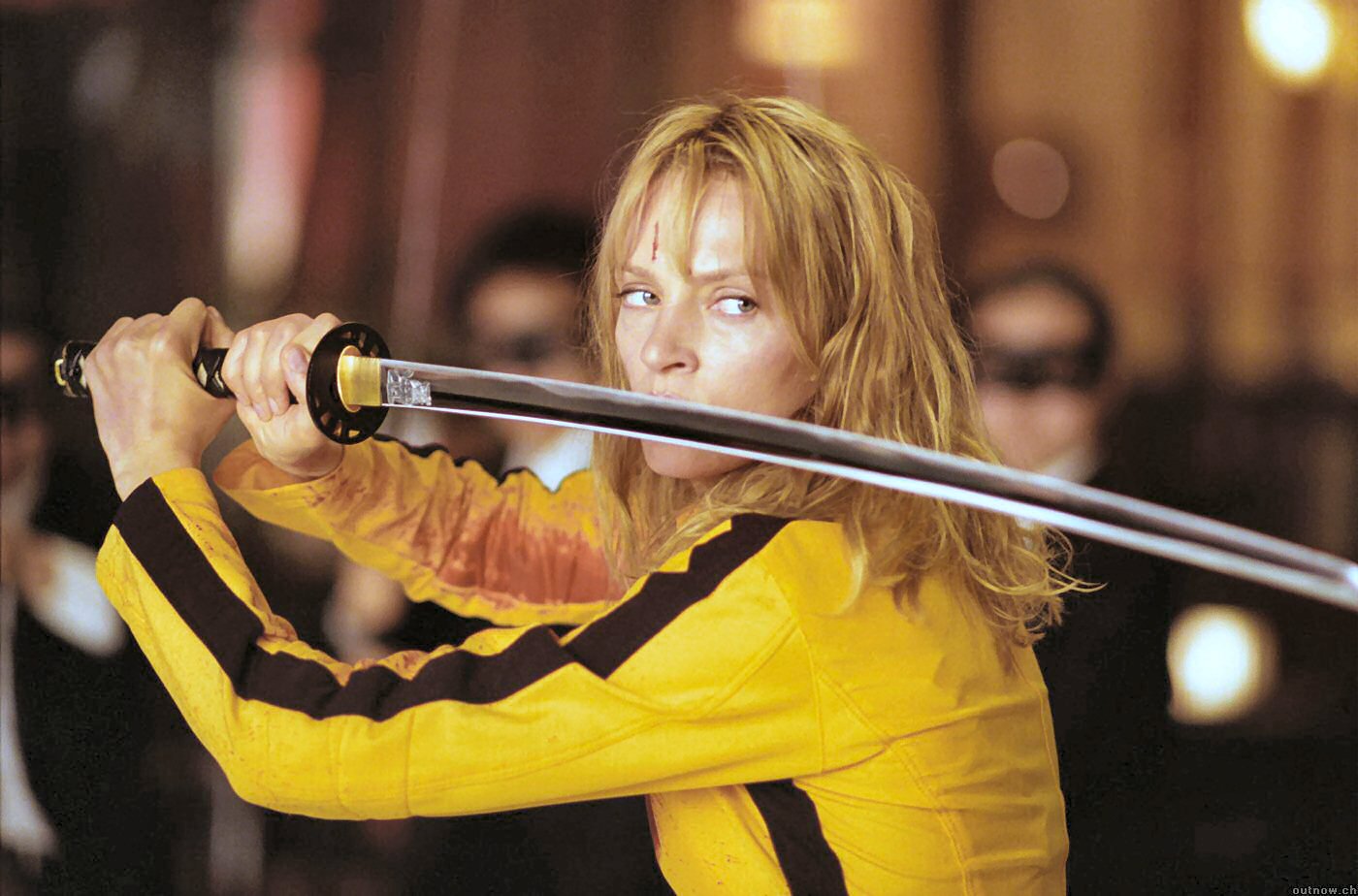 7. Kill Bill Vols 1 & 2, 2003/4Has there been a film (or films) like this before or since? Kill Bill is the ultimate expression of Tarantino's entire oeuvre, and all the minor Tarantinos who seek to emulate him: an expression of film history distilled beyond self-reference and irony into a new kind of film form, an entire super-ironic parable of pure style. Tarantino's skills as a film scorer (the music is brilliant) are equally matched by his elaborately staged costume drama. Both became instantly iconic in the culture, and possibly no other film this decade has had as much influence on advertising, art, and culture.
 6. Up In the Air, 2009Though released just in time for the end of the decade, this apparently simple little movie captures our times better than anything has in years. The only comedy on the list, director Reitman has made a career this decade of creating these fun, lighthearted tweaks of our popular culture (Juno, Thank You for Smoking); Up in the Air is his best, and the decade's.
 5. Chicago, 2002Rob Marshal's Chicago won the Oscars for 2002 - the first musical to do so in decades - and deservedly so. The movie is a joy to watch; Marshal's insight was to turn the performances into an expression of Roxie's imagination, thus transforming the theatricality and musicality into something that's uniquely cinematic: which is what so many filmed musicals lack. It also didn't hurt that Fosse's music and book was one of his best.
 4. The Reader, 2008It should have won the Oscars last year. A perfect film that tells a unique story about a German teenager's erotic relationship with a ticket taker with a dangerous Nazi past, and how their lives evolve. There're no missteps here, and the movie gets at questions of loyalty, history, complicity, and morality like few have.
 3. Brokeback Mountain, 2005Another movie that should have won the Oscars. This love story of two tragically star-crossed cowboys, based on an Annie Proulx short story, has all the scope, drama, and flair of any of the greatest of Hollywood screen romances. That Ang Lee's story is about two men, and stars up-and-coming leading man Jake Gyllenhaal, and the now immortalized Heath Ledger, makes it all the more remarkable.
 2. Lord of the Rings (trilogy), 2001 - 2003Peter Jackson seemingly went to New Zealand with a crew of young actors (and veterans Ian McKellan, Ian Holm, and Christopher Lee) and there, discovered cinematic gold. The gold just kept coming for three amazing, iconic movies that set the tone for this decade. Filled with everything that old Hollywood used to do and that we still want from our movies: great storytelling, amazing effects, dramatic scenery, and tales of bravery, valor, friendship, and hearts broken. Any one of the three movies could have won the Oscars, but they knew from the start, the ending would be the best.
 1. No Country for Old Men, 2007
No other movie this decade has so perfectly captured our era's sense of dread and foreboding. Based on McCarthy's excellent book and directed by perhaps our most original working directors, the Cohen Brothers, the movie came together as something standing even above the typical work of either of these fine artists. Perhaps the purest of any of this decade's examinations of innocence, complicity, and evil, No Country for Old Men goes a step further, and gives us a sense not only of the heart of darkness, but the toll it takes from us as we try to squeeze a bit of justice out of life, as well.
Here, then are my nominations for the best films of the decade - it was a difficult selection, so I'd love to hear thoughts from readers on any other films that you think should make the list, and why.
10. Children of Men, 2006This amazing piece of cinema (the twenty minute single take toward the end should go on record as the most amazingly staged camera move ever) relies not on special effects, but on the staging and impact of a semi-futuristic story about the inability of the human race to procreate, a world consumed by endless war, and one man's attempt to save a baby. Delivers a knockout, gut-reeling metaphor on the cruelties of civilization that we haven't seen since movies like Clockwork Orange or Dr. Strangelove.
9. Pan's Labyrinth, 2006Like Cuarón's Children of Men, del Toro's beautiful costume drama about a little girl who fantasizes escape from the clutches of a dictator during the Spanish civil war is an elaborately staged metaphor for a world consumed by cruelty and war, and goes straight for a guttural revelation at the end. Both movies are wonderful stories of innocence and darkness, but Pan's Labyrinth also creates an entire magical world of fairies, princesses, and satyrs: the extraordinary heights of imagination here gives it one up on Cuarón's fable.
8. There Will Be Blood, 20077. Kill Bill Vols 1 & 2, 2003/46. Up In the Air, 20095. Chicago, 20024. The Reader, 20083. Brokeback Mountain, 20052. Lord of the Rings (trilogy), 2001 - 20031. No Country for Old Men, 2007No other movie this decade has so perfectly captured our era's sense of dread and foreboding. Based on McCarthy's excellent book and directed by perhaps our most original working directors, the Cohen Brothers, the movie came together as something standing even above the typical work of either of these fine artists. Perhaps the purest of any of this decade's examinations of innocence, complicity, and evil, No Country for Old Men goes a step further, and gives us a sense not only of the heart of darkness, but the toll it takes from us as we try to squeeze a bit of justice out of life, as well.
Up In the Air: A Flawless Dramedy


It seems like such a simple movie: George Clooney plays Ryan Bingham, an experienced corporate downsizer (he fires people for a living), who books enough air time traveling from town to town that he’s about ready to be indoctrinated into the highly elite 10 million mile airline club. Natalie (Anna Kendrick), a young bright newbie, is his charge, accompanying him on the road to learn about the intricacies of the downsizing industry (times are booming, after all). That’s basically the set up, and the rest is about how Natalie learns that firing people his more than an abstraction, and how Clooney's Ryan moves past his well-practiced cynicism to reconnect to his family and his feelings.
Simple, yes, but there’s not a single wrong move in this seemingly simple dramedy that’s both intelligent and amusing, and that captures our present culture with a stroke of seeming luck (there’s not a film in recent memory that could claim to be quite this relevant).
The movie is actually relevant on two fronts at once. The consistent firings throughout the movie – which eventually demonstrate the entire range of possible reaction – certainly capture the drama (and sardonic irony) behind the headlines of the past year and a half. But perhaps even more to the point is how well the movie captures not only the life of so-called “road warriors,” but the two kinds of lifestyles that have evolved in our modern world: the corporate career (which seem to be for ambitious people who have personal issues driving them away from their home habitats – and whose personal lives tend to be, well, a bit emptier), and the stay-at-homes, those folks born between the coasts who have never, really, left the nest, whose personal lives are a bit too filled with family obligations and messy relationships, and look at suspicion and disdain at the first group, even as they secretly admire their sophistication and envy their experience.
Ryan and Natalie are clearly in the first group, and the story takes them from airport to airport (we get a birds eye view of each city before they land for the scene); Ryan finds a girlfriend, Natalie learns how to do her first firings (she’s good at it), and the movie heads inexorably to its confrontations. Ryan’s apartment, where he supposedly “lives” (about 45 days of the year) is an empty white box, and his single relationship of significance is with another fellow traveler of the skies (after sex in a random hotel in a random city, they check their laptops to see when their schedules bring them into proximity again for a quick nookie). Natalie has subordinated her own talents in order to follow her boyfriend to Omaha, and doesn’t seem to see a contradiction in wanting a stellar career and an idealized home life at the same time. Both are due for reckonings, and when they come, they are both amusing and satisfying.
The scenes when Ryan travels home to Wisconsin for his little sister’s wedding are perhaps the most outstanding. Here, the movie feels not just well crafted but also knowingly authentic: Ryan gets to revisit his high school, and share his experiences with his girlfriend (Alex – played wonderfully by Vera Farmiga), while he’s also forced to intervene in a family squabble, and use his powers of persuasion to make the case for marriage (a case, it must be said, he doesn’t really much agree with). It’s almost his cue to start over, to shed his life and re-assess the steady cynicism he’s had to adopt, and he’s like a teenager again, once again taking a chance on a crush, and leaving himself vulnerable.
Which is another reason I so like this film. It’s neither sentimental nor completely cynical. Instead, it simply seems wise. It’s also about how adults relate to each other, another treat we don’t so often get to see in films these days.
That’s why even though it may be simple, and essentially a light-hearted comedy, I really think Up in the Air belongs on the list of the best ten movies of the decade. It’s happens to be something that not only captures the zeitgeist of the times – it turns that into a keen observation about life, and about characters who know a lot but still have something more to learn.
But what’s most deft about this film is how well it’s constructed – from the superb acting to the editing, to the choice of cinematic moments, like the nice, understated ending. Like the people who’ve been “let go” by their firms, by the time they reach the end of the story, life for both Ryan and Natalie is “up in the air,” and for the first time, as Ryan looks out the airplane window, all he sees are clouds, his destination obscured from view. It’s a nice touch for ending a movie that throughout, so surely knows where it’s going.
Friday, December 25, 2009
Top Ten Gay Movies Of All Time
Seeing A Single Man prompted a discussion about how it would rank in the pantheon of gay themed movies, so it seemed timely to create this post of the top ten gay themed movies of all time. These aren't meant to be movies that are perennial audience favorites (AfterElton.com conducts an annual poll of those), which would naturally include many smaller films centered on young, good-looking couples, or even the movies that are most important to the evolution of "gay cinema" (such a list would have to include such titles as Boys in the Band, Philadelphia, Parting Glances, Longtime Companion, and Angels in America - none of which are included here. Why? Important movies for how they advanced the portrayal of gays on screen - but formally, as movies standing on their own as cinema, less interesting than those that make my list below).
There are actually so many films worthy of mention, that listing only ten would slight some of the quirkier and possibly most interesting. So I've expanded the list to twenty - consider the first ten mentioned below a bonus.
 20. Bad Education, 2004Pedro Almodovar has been the gay bad boy of Spanish cinema for almost three decades; though most of his movies focus on women on the verge of nervous breakdowns, Bad Education seems to be his most personal film, one that brings the irrepressible Almodovar style to the story of two long-lost fiends who are reacquainted, and recall their youths and churchly pecadillos. This film embraces the kind of interesting turns and flamboyant drama that only an auteur like Almodovar can deliver.
 19. Paris Is Burning,1990
 18. Apartment Zero, 1988A Hitchcockian thriller set in Argentina (there's a strong echo here of Rope), it explores the theme of gay men as Doppelgangers, murderers, and doubles. Perhaps arriving at a moment when gay consciousness was about to change in film, and thus still being very coded about the characters' sexuality, it nevertheless is a stylish thriller well capturing the spirit of independent cinema of its time.
 17. The Birdcage, 1996
The remake of the 1978 film, La Cage Aux Folles (which doesn't hold up nearly as well as our memories of this groundbreaking comedy would wish), the Nineties version staring Robin Williams and Nathan Lane is actually a superb comedy of slapstick and sentimentality. There's not a moment of poor timing in this well-directed comedy that seems to perfectly capture the perilous clash of cultures of the Clinton era.
 16. Wild Reeds, 1994
This beautiful French film won several awards but has often been overlooked by gay audiences. It tells a story that may be a little oblique for most (centering on a trio of friends - a classic gay/bi-sexual love triangle - during the French Algerian war), it has more in common with New Wave French cinema than with many of the more accessible gay-themed indies of the Nineties. Yet still one of the most beautiful coming of age films made.
 15. My Beautiful Laundrette, 1985
The film that put both Stephen Frears and Daniel Day Lewis on the map. Perhaps one of the best depictions of the confluence of race, sexuality, and politics in the 1980s, it wears a bit with time (no film tackling this subject would get away with so little flesh today), but still evokes its time and place so strongly, it may eventually become one of those films that are completely synonymous with its decade.
 14. Elephant, 2003Largely overlooked by all audiences, Gus Van Sant's lose depiction of the events leading up to the shootings at Columbine high school is a brilliant, haunting deconstruction of nihilistic youth. That van Sant imagines that his homicidal shooters are closet lovers may be a stretch of the truth, yet it ads a powerful psychology to what is otherwise an incomprehensible tragedy.
 13. L.I.E., 2001L.I.E. - for Long Island Expressway, amongst other things - tells the story of a fifteen-year-old boy, getting into trouble, who ends up befriending an older man who just happens to like...fifteen year old boys. Of all the small indie films that fall into this kind of creepy, gay pedophilia genre (in which I put films like Chuck and Buck and Happiness), L.I.E. is the best - and not only because it features a stand-out performance from Brian Cox.
 12. Maurice, 1987The grandiloquent interpretation of the E.M Forster novel by filmmakers Merchant and Ivory has all the sumptuousness one would expect from a Merchant/Ivory production, only the two main characters happen to be of the same sex. A classic of literature that stands up with any other work by Forster or the filmmakers.
 11. Another Country, 1984Yet another film on my list starring Colin Firth (did you find the other two?). A wonderfully told tale of the young Guy Burgess and the tangled web between spying and homosexuality.
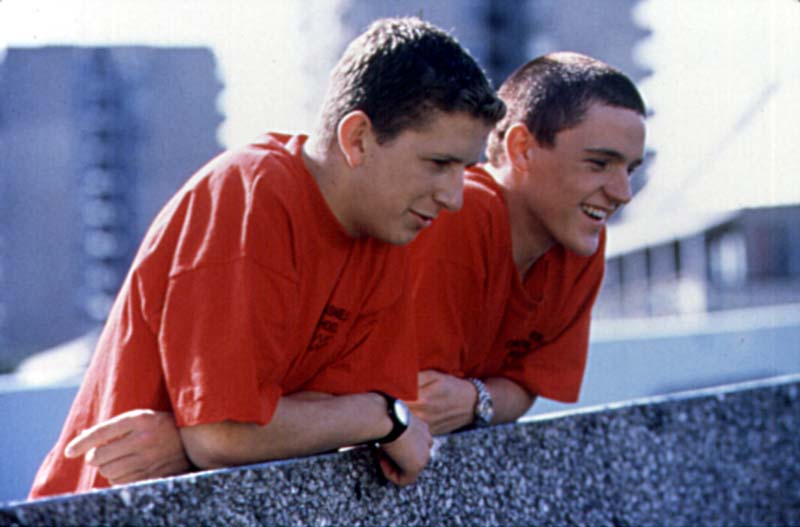 10. Beautiful Thing, 1996This fan favorite often makes the list of the top ten gay films, and deservedly so. In the late Nineties, before the big studios bought the indie houses and turned them into mini-majors, there were dozens of heartfelt independent gay movies made on small budgets for eager audiences, including Trick, Go Fish, Billy's Hollywood Screen Kiss, Edge of Seventeen, Velvet Goldmine, Bent, and The Broken Hearts Club. Beautiful Thing deserves to top that list, as this story of two young high school students falling in love has a purity of spirit and easy authenticity that elevates this material beyond mere gay love story.
 9. Gods and Monsters, 1998
This late-nineties film staring Brendan Fraser and Ian McKellen won a best screenplay Oscar for writer/director Bill Condon (who gave a great acceptance speech - perhaps the first Oscar speech to acknowledge a gay partner). The film, based on a novel by Christopher Bram, is a remarkable story of an artist haunted by his memories of World War One, who looks for beauty in the ugliness about him (and ugliness in the beauty). A wonderful metaphor for the artist's experience - and perhaps the gay man's as well.
 8. Paragraph 175, 2000Perhaps the best gay documentary ever made, Paragraph 175 explores the Nazi persecution of gays, and uncovers some remarkable interviews with those who lived through the nightmare. This fine film is more than a mere catalog of persecution; we hear what it was like for gays in Germany and neighboring countries before, during, and after the war, and find therein a remarkable culture as well as memorable tales of love, loss, and remembrance.
Just because a movie stars Terrance Stamp, Hugo Weaving, and Guy Pierce as three fierce drag queens on a trip across the country, doesn't mean it's good (just look at the sad American remake, To Wong Fu). What catapults Priscilla to the top of the list are the fine performances and the real sense of abandon and adventure captured by director Stephen Elliott. The costumes were fabulous too (even Oscar noticed that).
 6. Priest, 1994
Nominated for best film in three film festivals, this movie tackles the subject of gay sexuality and religion head on and without fear. As relevant today as it was fifteen years ago, Priest delivers a powerful story of a gay man coming to terms with his religion that's both erotic and intelligent.
 5. Far From Heaven, 2002This 2002 confection from gay underground auteur Todd Haynes (who started his career directing Barbie dolls and provided us with the absolutely critically influential gay indie, Poison) has received far too little attention for the real cinematic triumph that it is. This film of eerie, stiffling, 1950's surburbia and the "normal" housewife who uncovers her husband's homosexuality and abandons herself into an affair with an African American from the other side of the tracks is a study in film form, and has influenced culture since in ways uncountable - from "True Blood" to "Mad Men."
 4. A Single Man, 2009
Tom Ford does more than create pretty pictures here - he develops a film of heightened style from Christopher Isherwood's melancholy novel of lost love. Both a salute to the Italian Cinematic style of Bertolluci, and a kind of glossy, 1960's-era men's cologne commercial, A Single Man is sad and sexy, as well as a powerful statement about the meaning of mature, gay relationships.
 3. Boys Don't Cry, 1999
 2. Milk, 2008The second movie by Gus Van Sant to make the list, Milk is a fully realized film that's about both the coming of age of a gay man, and of a political movement. More than any other gay film, Milk fully integrates a portrayal of the gay experience and a very personal love story into a dramatic recreation of the culture and history that now informs every gay person's life.
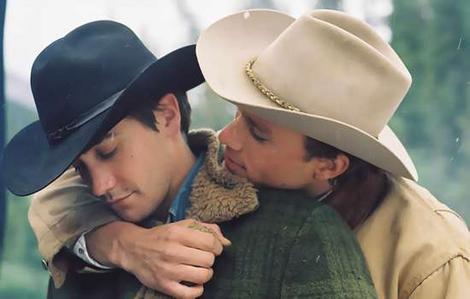 1. Brokeback Mountain, 2005
Lauded with accolades the world over, it should have won the 2005 Oscar Best Picture. Ang Lee's powerful portrayal of two closeted cowboys discovering their love for each other in the 1960's west is as big a movie as any of the Hollywood greats, and filled in every way with standout elements - from that amazing score, to the bountiful cinematography, to the gossip-worthy backstories of on-set romance, to the breakout performance by Heath Ledger. And let's not forget that breathtaking ending, when Ennis finally places Jack's shirt over his own, as if hanging in eternal embrace. A classic tearjerker, and though not nearly as politically aware as Milk, it's a film that certainly speaks to all audiences, as the very best of movies do.
Rather, I've compiled here a list based strictly on the criteria of how well these films hold up as film form...how they would fare in any list of cinematic top ten. It would be no surprise, then, that most of these movies are more recent: directors and studios have only recently begun creating films featuring characters openly identified as gay that are created with the same level of writing, directing, and acting that one might expect from any Oscar-worthy film.
There are actually so many films worthy of mention, that listing only ten would slight some of the quirkier and possibly most interesting. So I've expanded the list to twenty - consider the first ten mentioned below a bonus.
20. Bad Education, 200419. Paris Is Burning,1990The movie that introduced the word "vogueing" into the lexicon, inspiring an entire album of Madonna songs. But Jennie Livingston's documentary of underground drag balls still remains a forceful and authentic exploration of a sub-sub culture.
18. Apartment Zero, 198817. The Birdcage, 1996The remake of the 1978 film, La Cage Aux Folles (which doesn't hold up nearly as well as our memories of this groundbreaking comedy would wish), the Nineties version staring Robin Williams and Nathan Lane is actually a superb comedy of slapstick and sentimentality. There's not a moment of poor timing in this well-directed comedy that seems to perfectly capture the perilous clash of cultures of the Clinton era.
16. Wild Reeds, 1994This beautiful French film won several awards but has often been overlooked by gay audiences. It tells a story that may be a little oblique for most (centering on a trio of friends - a classic gay/bi-sexual love triangle - during the French Algerian war), it has more in common with New Wave French cinema than with many of the more accessible gay-themed indies of the Nineties. Yet still one of the most beautiful coming of age films made.
15. My Beautiful Laundrette, 1985The film that put both Stephen Frears and Daniel Day Lewis on the map. Perhaps one of the best depictions of the confluence of race, sexuality, and politics in the 1980s, it wears a bit with time (no film tackling this subject would get away with so little flesh today), but still evokes its time and place so strongly, it may eventually become one of those films that are completely synonymous with its decade.
14. Elephant, 2003 12. Maurice, 1987
 10. Beautiful Thing, 19969. Gods and Monsters, 1998
This late-nineties film staring Brendan Fraser and Ian McKellen won a best screenplay Oscar for writer/director Bill Condon (who gave a great acceptance speech - perhaps the first Oscar speech to acknowledge a gay partner). The film, based on a novel by Christopher Bram, is a remarkable story of an artist haunted by his memories of World War One, who looks for beauty in the ugliness about him (and ugliness in the beauty). A wonderful metaphor for the artist's experience - and perhaps the gay man's as well.
8. Paragraph 175, 2000Just because a movie stars Terrance Stamp, Hugo Weaving, and Guy Pierce as three fierce drag queens on a trip across the country, doesn't mean it's good (just look at the sad American remake, To Wong Fu). What catapults Priscilla to the top of the list are the fine performances and the real sense of abandon and adventure captured by director Stephen Elliott. The costumes were fabulous too (even Oscar noticed that).
 6. Priest, 1994
Nominated for best film in three film festivals, this movie tackles the subject of gay sexuality and religion head on and without fear. As relevant today as it was fifteen years ago, Priest delivers a powerful story of a gay man coming to terms with his religion that's both erotic and intelligent.
5. Far From Heaven, 20024. A Single Man, 2009Tom Ford does more than create pretty pictures here - he develops a film of heightened style from Christopher Isherwood's melancholy novel of lost love. Both a salute to the Italian Cinematic style of Bertolluci, and a kind of glossy, 1960's-era men's cologne commercial, A Single Man is sad and sexy, as well as a powerful statement about the meaning of mature, gay relationships.
3. Boys Don't Cry, 1999It won Hillary Swank her Oscar, but this movie was more than a star vehicle. The story of Brandon Teena, a transgendered teen born female who preferred life as a male, this fictional account of a true story carried the weight of real drama, as well as that unforgettable performance.
2. Milk, 20081. Brokeback Mountain, 2005Lauded with accolades the world over, it should have won the 2005 Oscar Best Picture. Ang Lee's powerful portrayal of two closeted cowboys discovering their love for each other in the 1960's west is as big a movie as any of the Hollywood greats, and filled in every way with standout elements - from that amazing score, to the bountiful cinematography, to the gossip-worthy backstories of on-set romance, to the breakout performance by Heath Ledger. And let's not forget that breathtaking ending, when Ennis finally places Jack's shirt over his own, as if hanging in eternal embrace. A classic tearjerker, and though not nearly as politically aware as Milk, it's a film that certainly speaks to all audiences, as the very best of movies do.
A Single Man: Stylish Melancholy


Tom Ford's A Single Man - based on a novel by Christopher Isherwood - opens with scenes of a svelte, naked male body, turning luxuriously, anxiously, underwater. It might be a scene for a cologne commercial, except the body seems less an object of desire than a signal of anxiety. Desirable, yes, but also, perhaps, struggling against death.
The next scene illustrates that feeling more definitely: a car accident on a snowy road. A handsome young man has been thrown out of the car, as has a dog - a black and white terrier. Both appear to be dead. A man walks towards the dead man in the car, slowly leans over, and with tremendous tenderness, he kisses him.
The two scenes establish firmly what is to follow, both narratively and visually. The man who is bending over the dead body is George Falconer (Colin Firth), an English teacher at a small, Southern California college in 1962. The dead body is his lover of sixteen years (an ex marine named Jim, now an architect, who lives with George in their fabulously sparse modern home). And the dog, of course, is their dog. The scene is a dream - a kind of farewell - and when George wakes up, he's still in his life, and mourning terribly. There's also another dog, that's gone missing, but Jim's family (whom he was visiting that fateful night) know nothing about it: nor do they know about George, or wish to.
The dead lover would be sad enough, but somehow, the dead dog makes the scene particularly melancholy...as if to emphases not only the totality of everything George has lost, but the purity of it, as well.
What follows is a test of George's will - his will to live, or not live, with the loss of everything so dear. He goes about his job teaching English at the college, and he takes solace with this close friend from England - a woman named Charlie (Julianne Moore), with whom he slept years ago and who still desires him, and has demons of her own.
But like the opening, the story unfolds with the same slick style and studied pace of the most heightened exploration of culture. Perhaps what amazes me most about the film is that Ford is able to find so many great LA sets of mid-century modernism: not only that great house, but the buildings on campus, a bank, a bar, even Charlie's garishly decorated and quaffed arie. The sets here would give "Mad Men" a run for its money, but Ford doesn't limit his sense of style to the decor...there's also the editing, the use of color and light, everything one might expect from the slickest of commercials.
This strength is also, I'm afraid, the movie's weakness. The technique Ford uses to saturate the color of the film whenever George gets a whiff of the life, or lust, of the world around him - that tempts him to come back to life - is lovely, at first, but eventually overused. The same might be said of certain plot devices, like a gun that George carries around, hoping to find a chance to use on himself. Yet Ford has also captured the stylish introspection of the best of Italian cinema, recreating moments from George's life with Jim with just the right degree of nostalgia and romance (even though, at times, their relationship may be a bit too idealized...one of the hazards of great style), and the scene of his dinner with Charlie, where they both analyze each other's problems over wine and culture, has a breezy authenticity that could come straight of '60's European New Wave cinema.
And even though the movie's ending - which happens suddenly, and carries great symbolism - is unnecessary, even deflating, the film is a great triumph for first-time auteur Ford. It's both sexy and sad, and illustrates with powerful simplicity a committed adult gay marriage, even in the conservative, stylish 1960's, when such a term was rarely applied, or respected. Firth and Moore are both excellent (I wouldn't be surprised if this performance garners Firth an Oscar nomination), as is the supporting cast. It's hard to think of another film like it - that takes a long-term adult gay relationship as a given, and builds from that a story of a completely imagined world. It may be a bit un-polished, but it's still a nice little gem.
Thursday, December 24, 2009
Avatar: Cameron's Long-Awaited Metaphor

 The basics about Avatar have already been said: it's essentially a politically correct story of indigenous populations rising against the American military machine...only on another world, with high-tech machinery to transport our damaged, young marine hero, Jake Scully (played by a witheringly thin Sam Worthington) into a powerful, alien body on a colorful world of super spectacular graphical effects.
Which is all basically correct. Or to sum it up thusly - Avatar is a pill of politically correct revenge fantasy, wrapped in a colorful, psychedelic mushroom of graphical animation wizardry.
Which is to say that Avatar probably has more in common with Inglourious Basterds than with Dancing With Wolves or Pocahontas (though it certainly shares a zeitgeist with all three). Both Avatar and that Basterds movie imagine the underdog engaged in a violent, satisfying revenge against their oppressors (in Avatar, the Na'Vis are kind of an amalgam of indigenous peoples everywhere - 75% American Indian, but a good portion Palestinian, Druid, and Aborigine as well. In Basterds, the underdogs are just good old Jews).
But what's perhaps more interesting about Avatar to me is how it brings into focus Cameron's long but seemingly disparate career - from Aliens and Terminator through The Abyss, with a detour on the Titanic. Avatar, over a decade in the making, picks up and combines themes from all those movies - the nerdy gallantry of science from The Abyss, the primordial logic of survival of the fittest from Aliens, the implacable, unstoppable force of Terminator, and even the romance and physical joy in the face of mortality of Titanic. In a way, then, Avatar is Cameron's most realized film: a complete world where all these themes toss against each other as Jake, our hero, goes on his journey from disabled jar-head to physically imposing Aboriginal leader.
That journey is a bit predictable, and our viewing party was pretty much twenty minutes ahead of the plot the whole way through (we even predicted one of the lines - when Sam's instructor in the Avatar, Grace, goes out with the phrase "I've got to get a sample"). There's no subtly lost in the story, but then, the editing here is probably the best I've seen of any movie in 2009, so there's not a single wasted moment, either. Sam's DNA is a match for his brother, a member of a science party who transport themselves into Avatars, or created bodies able to live on the alien world of Pandora. The human scientists are able to operate these blue bodies by remote control in order to live among and interact with the native population - the Na'vis. Sam's brother has died, so Sam is recruited to take his place - Cameron takes us through the set up quickly and with breezy humor from two of my favorite actors, Sigourney Weaver and Giovani Ribisi (who plays the factory foreman who's there on Pandora to look for a valuable mineral - "unobtanium"). Ribisi's character is backed up by some pretty heavy duty military machinery, personalized in the imposing personage of Colonel Quaritch, who ends up becoming, naturally, Jake's ultimate nemesis. I'd have preferred it if they'd simply called the mineral they were all searching for "MacGuffin-anium," since that's all it is, but Cameron knows how to sweat the details, here: the data-rich consoles and desktops the science team operate clearly resemble the computers and screens in Cameron's own 3D effects shop - and both sets of machines are able to produce some pretty impressive effects.
Which brings us to the other interesting aspect of the movie: the 3D. This was personally very hard for me to watch (and probably what disappointed me most). There's no real field of vision in the 3D (the camera thoroughly drives areas of focus), so areas of the screen I usually look at were out of focus, and my eyes were constantly being forced to watch the colorful lights or bright action, when that's not how I usually view a movie. It was actually a bit painful and disorienting - especially at first. And I think Cameron intended this. In essence, by putting on the 3D glasses, we're entering our own Avatar: the avatar of Cameron's movie. (Yes, Avatar is its own Avatar.) Not to carry this too far, but this is why I disagree with those critics who say that delivering a fable about the natural world using high-tech gadgetry is disingenuous. Quite the opposite: what Cameron has done here is to Re-create the natural world using technology, the way the Avatar recreates the experience of movement for Jake. Both worlds are, actually, a kind of science fakery (although in Jake's world, he's offered the possibility of transcendence at the end).
That recreation, the dream of the movie (and the dream of Pandora), are both meant to be experienced as if they were real...just as Jake learns to experience his time with the Na'vis, we learn to experience Cameron's world of cinematic wizard on the screen. The movie wants us to fall in to the technology, to get used to the glasses and effects the way Jake gets used to his new body. In this way, then, Cameron seems to be saying that the lessons we learn from the movie are not all that different - and perhaps just as real - as those learned by his hero.
Which may be a good thing. The movie's lesson is simple - as is the experience that Jake (and we, the audience) are taken through. After being thought of only as a moron all his life, the Na'vis treat Jake as having the potential to be a man, and they challenge him to really be all he can be. There's little doubt that over this long and luxurious lesson, filled with spinning, psychedelically colored pinwheels, flying dragons, and a world whose entire nervous system is interconnected, that Jake's allegiances won't dramatically shift. The real question is whether ours will. Is this lesson that Cameron wishes to impart on the mass audience - that in our rapaciousness, our country truly damages the meaningful connections of the civilizations we destroy - is this lesson really learned by the audiences flocking to see Avatar this season?
My sense is, probably not, though maybe some are. Which to me, is a good thing. After all, some of the most beautiful and powerful lessons we ever learn are the simple ones.
Sunday, December 20, 2009
Brothers: Bringing the War Home

 There are two war movies out this season – The Hurt Locker, and Brothers – and really, after watching Brothers, I have to wonder if we, the American people, don’t owe at least one of them a Best Picture Oscar in February. I know that Brothers, at least, should be a contender.
It sounds like an odd thing to say, but the war in Afghanistan is now the longest war in American history – headed into its eight year – and with even more troops headed over in the next two years, it’s remarkable how absent this battle has been from our consciousness, and our popular culture. Sure, it makes a great backdrop for a mindless summer blockbuster like Transformers. But unlike Viet Nam, say, the war has had very little effect on either our counter-culture or our consciousness.
Brothers may seem like the less obvious choice to intro with a paean to American sentimentality or supporting our troops. And it’s true that this drama mostly takes place in the safe, middle-class suburban landscape of the some unidentified western burg (with only about thirty minutes of B footage of Sam Cahill, played by Toby Maguire, serving his rotation through the Taliban-infested mountains of Afghanistan, scattered throughout). But it’s the psychological effect of this war on both the troops and the families at home which this movie wishes to deeply investigate: and that effect, in the end, is one that this movie clearly takes on by focusing both on the ordinary-seeming dynamics Twenty-First Century American middle-class psychology in confrontation with the stark moral choices poised by a serious war of cultures.
Which is to say, Brothers is a movie that sneaks up on you – that at first seems like a fairly by-the-book family drama about two brothers (Sam, the good older brother, who joins the army and does his duty, and Tommy, played by Jake Gyllenhaal, as the opposite: the rascally younger brother, who’s been in jail for assault and robbery and has no respect for his life) – yet it reveals itself, with a somewhat sudden intensity, to be really something else entirely, a movie about how a veteran survives the ravages of a war that our society seems barely prepared to confront.
The set up to the movie in fact almost seems too pat. Sam is a very good brother, wound tight and burdened with high expectations, as well as a family that depends on him, misses him, and has little understanding for what obligates him to return to the war time after time. Tommy is the very bad brother, who snarls at their father, leers at Sam’s lovely wife Grace (played by a suddenly mature Natalie Portman), and generally skulks around, being sultry, sexy and powerful yet not much help to anyone as his brother leaves his family yet one more time. We can see where this set-up is going, and for a good hour, it pretty much does: Sam is tested under fire, and this good brother is headed for a crack-up, while his counterpart at home (his dobbleganger, one might say) begins to clean up his act – headed in the opposite trajectory – and becoming more attractive to Grace, Sam’s loyal but clearly sensual wife.
Jim Sheridan directs these three (along with Sam Shephard, as the father) with a kind of actor’s studio quality – which gets some fine acting and performances from the ensemble, yet also at times feels a bit too informal, as if the crew were about to break character and needed to try another take. In a way, this style forces you a bit out of the story and into the subtleties of the acting, so the informality to the direction may be intentional, even if it seems slightly sloppy at time. In the end, however, Sheridan coaxes some absorbing performances from Maguire and Gyllenhaal. Both are quite remarkable, their performances almost riding above the surface of the film. While we’ve seen such stand-out performance from Gyllenhaal before (his work in Brokeback Mountain was perhaps unfairly eclipsed by Heath Ledger), this is the first real standout acting I’ve seen from Maguire, catapulting him past his Spiderman boyishness and into the realm of truly interesting leading men. Actually, one of the most enjoyable things about this movie is seeing three iconic child actors finally take the stage as our new leading adult thespians (which is no doubt part of the logic in Portman’s decision to produce the movie).
However, about two-thirds into the film, the movie makes a most daring move: it doesn’t just tweak Sam’s wound up nature, it shatters it completely, when Sam, under the pressure of captivity, makes a single decision that will change his life forever. This break is a courageous thing to do in any story – because afterwards, there are so many dangerous shards that need to be picked up for the story to work. Brothers goes through the heavy lifting of picking up those shards, and in the process, becomes much more of a movie than it seemed to be setting out to be.
When Sam returns home, there are so many ways in which this movie could veer into cliché, yet Brothers steers clear of all of them. What we end up getting are a series of about six amazing scenes, including a dinner scene when Sam’s elder daughter, clearly feeling out her own psychological dark depths, says just the precise thing to precipitate the danger that Sam now poses to his family.
All of this is observed with remarkable insight. The well acted setup that has come before is nothing compared to the explosive denouement that awaits, and in the end, we realize that what has been haunting this entire family for generations are the truths of war too terrible to be uttered. Brothers finally utters those truths…and even if you’ve let thoughts of our eight-year war glide past in the background, or buried on some distant news channel, I challenge you to forget this movie easily.
Subscribe to:
Posts (Atom)