Showing posts with label gay themed. Show all posts

Sunday, December 5, 2010

Burlesque: Rehashed Glitz for the Holidays

I wish there was more to this movie staring Christina Aquilera as an impossibly talented ingenue who comes to L.A., moves in next to a burlesque night-club (run, of course, by Cher), and connives her way into the ensemble and to eventually being headliner of the show. The movie follows tried-and-true hollywood formula (they've been telling this story ever since All About Eve: Chicago was the latest incarnation) and offers few surprises...except for the music. The music is actually much better than one might expect for a film of this type (aimed at gay men and teenyboppers) and thank god, too, as it's what gets you through the sappy storyline.

Surprisingly, Aquilera gets most of the numbers - that woman can sing. We only get two Cher numbers, but it's nice to see her vocals still resonate. One forgets that Cher is also quite an actress (does anyone remember Silkwood? Mask? Moonstruck?). Cher was an Eighties sensation and she and Stanley Tucci (as her gay manager) are the adults in the film. They liven up their scenes with lighthearted banter while the rest of the characters make somber sincerity out of their tinfoil lines.

When Aquilera's character, Ali, arrives in Los Angeles - with just $200 dollars in her pocket - my first thought was that this could be the very same opening about how women end up being hookers in L.A. But this isn't a movie about lost dreams and the hard realities of the street. In fact, just the opposite: it's a pure fairy tale where the princess comes to town in order to conquer the world, in just three easy lessons. Perhaps the most inane aspect of the movie is the romance between Ali and the bartender who first introduces her to the society of the club, Jack (played by Cam Gigandet in eye liner, three-day beard, and 1% body fat). "I thought you were gay," Ali tells Jack while sleeping over at his apartment (his girlfriend is conveniently away in Paris). No - not gay, just gay bait. The two of them slink about each other for the remainder of the movie, setting up sit-com-like reasons for not consummating their mutual lust until the absolute moment when its no longer possible to put off. The whole affair is impossible to watch except for Gigandet traipsing shirtless in order to entertain the ladies (and gay boys) in the audience. This is one of those films where anything that happens between the characters makes no sense other than as pure titillation.

Of course, the plot hinges on whether Cher's Tess will lose the club, whether Ali and Jack will ever get it on, and how all will come out right in the end. In between we're entertained with various burlesque numbers - singing and dancing - that's probably worth the $10 price of admission considering there's little else of musical note at the movies these days.

The producers of this movie are clearly trying to capture three different audiences at once: teenage girls, gay men, and women of a certain age who like the old Hollywood musicals. That gives this movie a bit of a feel of the Palm Springs Follies...though I have to say, with performances from knock-out singers like Aquilera and Cher, Burlesque certainly delivers the numbers.

Wednesday, November 24, 2010

HumpDay: Mumblecore Cock Tease


The phrase "all cackling and no eggs" was never more appropriate than it is for this indie flick, about two straight pals who decide to make a gay porno for the local "Hump Day" arts festival.

The mumblecore movement - so dubbed in 2005 - centers on improvised conversations of 20-somethings, often talking in bed either before, during or after sex. Actually not necessarily even that...as mumblecore could be really about anything, even the Arab / Israeli conflict, as long as it's chatty, freeform, and "life-like."

HumpDay is written by the female director Lynn Shelton, one of the rising mumblecore directors, who also directed one of this season's "Mad Men" episodes. Everything in this film is set up to explore just how deeply a modern male friendship - and the semi-sexualized homoerotic banter between two straight friends - might actually go. One could say that this is a "bromance" taken to its ultimate logical conclusion.

Ben and Anna are an average, somewhat happily married twenty-something couple for whom the romance has recently worn off. When we meet them, we find them negotiating sex, planning to have a baby, and going about their daily routines with absent-minded habituation. They hardly notice each other, even as they entertain their personal endearments and halfheartedly complain about the daily annoyances of living with another human being.

Into this stasis walks Andrew - Ben's old friend from college - who still seems to be living the swinging single life, breezing into town to knock on their door at 2am and open up the nearest bottle of whiskey. Andrew is just the tonic the married Ben seems to be pining for: a happy-go-lucky blast from his youth. There's also...somehow...the least bit of some kind of sexual tension between the two, as their hugs and stares into each other's eyes go on just a moment longer than is comfortable for either.

Of course, one thing leads to another, and Ben soon has Andrew ditching Anna's carefully prepared pork-chop dinner and partying with Andrew's new-found bohemian friends (a pair of lesbians and a few other assorted artists and hangers on). Excellent scene, thinks Ben, and he's hooked on Andrew's partying, ambi-sexual world before you can say "homosexual tendencies." When Andrew's lesbian friends tell Andrew about the upcoming arts festival - Hump Day - Andrew sarcastically suggests that he and Ben should make a gay porno as an art piece. "I'd do it," says Ben, half facetious, but half serious, wanting to explore where this thing might go. "Yeah, so would I," says Andrew, and the two of them both know the other really wants to do it, even though several more minutes of (presumably) heterosexual posturing must go by...and even a few more scenes...before each finally decides that the other is serious.

This is certainly no gay porn, where the two straight guys suddenly find themselves hopping into bed. Most of the movie really consists of Ben and Andrew talking about whether they really want to do it, if they would do it, and - finally, when they eventually get around to deciding to do it - how they would do it (which takes forever to negotiate and ultimately...well, you get the picture). I've never seen two dudes talk so much about whether they want to have sex with each other. Clearly, this is an urge that neither can really explain (although the scene where they do try to explain it to each other - Ben has, apparently, some past homoerotic attraction to a video store clerk that he needs to understand, and Andrew thinks that gay sex will make him a better artist - is the best in the film). There are, indeed, some great moments that come out of the interactions between these two actors, and the improvisation does give this movie a certain introspective, semi-titillating, expectant flavor, like a freshman dorm at 2am...but there's not quite enough consistency to make all that conversation worthwhile.

I know that this movie is intentionally leading us on a bit of a merry chase - and that the scenes are all, in fact, improvised - but for such build up, the ending is a decided let down. Neither Ben nor Andrew really work out what's driving them, though they do manage to discuss it in every conceivable way possible.

Was I really this chatty at twenty-nine? It's hard to believe, but then, that's the device of this film. Young people these days seemingly have a lot to talk about. One has to wonder how long these two would have gone on talking, however, had they actually started any kind of real relationship.

Monday, August 30, 2010

The Kids Are All Right: Same-Sex Family Drama

The problem with most gay and lesbian themed movies is generally that this is an underserved genre: small budgets, novice actors, and undeveloped scripts focused on immature characters give most of these films the feeling of high-school drama, and even if they have a certain kind of appeal for their audience, they feel largely uninspired as film form.

The Kids Are All Right, the new movie about a same-sex couple and their two teenage kids, strives valiantly to rise above the limitations of its genre. With a fine ear for family dialogue and a stellar cast at the helm (Annette Bening and Julianne Moore as the couple, and Mark Ruffalo as the male interloper who is the unwanted sperm donor for the two kids), the movie feels like something more: like a keenly felt exploration of adult, family dynamics, no matter what the orientation of the parents.

Yet it’s sometimes hard to tell if it’s writer / director Lisa Cholodenko (Laurel Canyon / "The L World") who’s creating the fine moments in the film, or the actors. The story wants to go in a direction that feels constrained and false, suggesting that Ruffalo (who plays Paul in the film, a restaurateur and motorcycle-driving Zen-spouting Californian) really is an interloper and half-loser who would rather take over this family than start his own. Or that Bening’s Nic is inattentive and domineering and Moore’s Jules is aimless and polymorphous, leading them to a family argument that is a culmination of the unhappiness in their relationship. Yet the actors all bring out a humor and humanity in the characters that make them more than their roles in the film; they feel like fully realized human beings, interesting if flawed people who are worthy of our time and each other’s.

At the same time, there is definitely a novice quality to the film’s direction and editing, especially in the first act. Scenes that hang a second too long or dialogue delivered with flat inflection at times gives the film a Todd Haynes’ “surfacy” tone, as if we’ve stumbled into stinted parody, when what the director is really after is a casual authenticity. I’m afraid this may confuse many in the audience into taking the characters and their desires less seriously than they deserve.

Where the movie shines is when it’s delivering its unique, quirky insights, such as when Jules tries to explain to her fifteen year old son, who’s accidentally found their hidden sex tape, why the two women enjoy watching gay male porn when having sex. She gets tumbled up trying to explain the difference between inside and outside erogeny, and the moment feels both authentic and unique, making us realize just how rare it is not only to see a female-headed household on film, but any depiction of a real adult relationship or the genuine travails of child-rearing.

Leading what they think is a normal gay, middle-class life, the happy same-sex household gets distracted from their normal issues when the children decide they want to find their sperm donor. Played with charming roguishness by Ruffalo, Paul is both an adult child and a successful entrepreneur (I love his home, with their expansive gardens ripe for planting). He immediately takes a shine to the kids, and they to him, and slowly insinuates himself into the family. Again, the way that Paul falls in love with his newly found progeny, and they with him, endears us both to the characters and their dilemma.

All of this is supremely weighty and interesting. It’s a shame, then, that the movie feels it needs to create artificial drama by instigating an affair between Jules and sperm donor Paul. It isn’t just that sex with a man is politically incorrect – though one suspects that Cholodenko is testing the audience a bit with this. It’s that the affair looms up and crushes all the gentle insights that have come before. For one, it feels false, a plot development coming from the writer than more authentically from the characters, who after raising two find children, one hopes is smarter than this. For another, the false drama of the affair crushes the types of family insights we’d gotten before, and the trajectories of the son and daughter, never mind the two women, are cut short. Instead of stock lesbian accusations that their sperm donor is an interloper, we should be seeing how the son has resolved his self-esteem issues with his violent (and possibly secretly gay) friend; how the daughter has gotten out from under her mothers’ thumbs; how the two women will navigate their relationship now that their daughter is leaving home.

We don’t get to see any of that, and it’s a bit frustrating that the movie has chosen to focus on the sperm donor “issue” instead of the genuine family dynamics. I left the movie feeling that Paul had gotten the short end of the deal. He actually seemed to make a good father, and there was no reason the movie couldn’t have found a way to integrate him into the family (as Dennis Lim has pointed out in the NY Times, as many gay families have done with a biological parent). Instead, the movie seems to go out of its way to justify excluding him, and one can’t help but feel it’s succumbed a bit to ideology over good writing.

Just like an earlier generation of gay movies, then, this one similarly feels like it has the weight of representation on its shoulders, and perhaps in attempting to deal with all the “hot button” issues that a lesbian couple raising children face, it could have benefited by allowing itself to be simply quirky and true. Just as the parents feel pressure to make sure their kids are perfect, the filmmaker seems to feel pressure to deal head-on with core issues of same-sex child-rearing. Yet out of the corners of this film peaks some unexpected characters and discovered joy. That’s where its strength as a film lies; not in its depiction of a key gay / lesbian issue, but in its depiction of a family.

Friday, December 25, 2009

Top Ten Gay Movies Of All Time

Seeing A Single Man prompted a discussion about how it would rank in the pantheon of gay themed movies, so it seemed timely to create this post of the top ten gay themed movies of all time. These aren't meant to be movies that are perennial audience favorites (AfterElton.com conducts an annual poll of those), which would naturally include many smaller films centered on young, good-looking couples, or even the movies that are most important to the evolution of "gay cinema" (such a list would have to include such titles as Boys in the Band, Philadelphia, Parting Glances, Longtime Companion, and Angels in America - none of which are included here. Why? Important movies for how they advanced the portrayal of gays on screen - but formally, as movies standing on their own as cinema, less interesting than those that make my list below).

Rather, I've compiled here a list based strictly on the criteria of how well these films hold up as film form...how they would fare in any list of cinematic top ten. It would be no surprise, then, that most of these movies are more recent: directors and studios have only recently begun creating films featuring characters openly identified as gay that are created with the same level of writing, directing, and acting that one might expect from any Oscar-worthy film.

There are actually so many films worthy of mention, that listing only ten would slight some of the quirkier and possibly most interesting. So I've expanded the list to twenty - consider the first ten mentioned below a bonus.

20. Bad Education, 2004
Pedro Almodovar has been the gay bad boy of Spanish cinema for almost three decades; though most of his movies focus on women on the verge of nervous breakdowns, Bad Education seems to be his most personal film, one that brings the irrepressible Almodovar style to the story of two long-lost fiends who are reacquainted, and recall their youths and churchly pecadillos. This film embraces the kind of interesting turns and flamboyant drama that only an auteur like Almodovar can deliver.
19. Paris Is Burning,1990
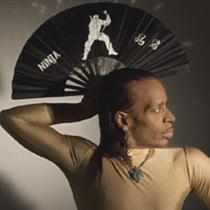
The movie that introduced the word "vogueing" into the lexicon, inspiring an entire album of Madonna songs. But Jennie Livingston's documentary of underground drag balls still remains a forceful and authentic exploration of a sub-sub culture.


18. Apartment Zero, 1988
A Hitchcockian thriller set in Argentina (there's a strong echo here of Rope), it explores the theme of gay men as Doppelgangers, murderers, and doubles. Perhaps arriving at a moment when gay consciousness was about to change in film, and thus still being very coded about the characters' sexuality, it nevertheless is a stylish thriller well capturing the spirit of independent cinema of its time.

17. The Birdcage, 1996
The remake of the 1978 film, La Cage Aux Folles (which doesn't hold up nearly as well as our memories of this groundbreaking comedy would wish), the Nineties version staring Robin Williams and Nathan Lane is actually a superb comedy of slapstick and sentimentality. There's not a moment of poor timing in this well-directed comedy that seems to perfectly capture the perilous clash of cultures of the Clinton era.

16. Wild Reeds, 1994
This beautiful French film won several awards but has often been overlooked by gay audiences. It tells a story that may be a little oblique for most (centering on a trio of friends - a classic gay/bi-sexual love triangle - during the French Algerian war), it has more in common with New Wave French cinema than with many of the more accessible gay-themed indies of the Nineties. Yet still one of the most beautiful coming of age films made.

15. My Beautiful Laundrette, 1985
The film that put both Stephen Frears and Daniel Day Lewis on the map. Perhaps one of the best depictions of the confluence of race, sexuality, and politics in the 1980s, it wears a bit with time (no film tackling this subject would get away with so little flesh today), but still evokes its time and place so strongly, it may eventually become one of those films that are completely synonymous with its decade.

14. Elephant, 2003
Largely overlooked by all audiences, Gus Van Sant's lose depiction of the events leading up to the shootings at Columbine high school is a brilliant, haunting deconstruction of nihilistic youth. That van Sant imagines that his homicidal shooters are closet lovers may be a stretch of the truth, yet it ads a powerful psychology to what is otherwise an incomprehensible tragedy.

13. L.I.E., 2001
L.I.E. - for Long Island Expressway, amongst other things - tells the story of a fifteen-year-old boy, getting into trouble, who ends up befriending an older man who just happens to like...fifteen year old boys. Of all the small indie films that fall into this kind of creepy, gay pedophilia genre (in which I put films like Chuck and Buck and Happiness), L.I.E. is the best - and not only because it features a stand-out performance from Brian Cox.

12. Maurice, 1987
The grandiloquent interpretation of the E.M Forster novel by filmmakers Merchant and Ivory has all the sumptuousness one would expect from a Merchant/Ivory production, only the two main characters happen to be of the same sex. A classic of literature that stands up with any other work by Forster or the filmmakers.

11. Another Country, 1984
Yet another film on my list starring Colin Firth (did you find the other two?). A wonderfully told tale of the young Guy Burgess and the tangled web between spying and homosexuality.


10. Beautiful Thing, 1996
This fan favorite often makes the list of the top ten gay films, and deservedly so. In the late Nineties, before the big studios bought the indie houses and turned them into mini-majors, there were dozens of heartfelt independent gay movies made on small budgets for eager audiences, including Trick, Go Fish, Billy's Hollywood Screen Kiss, Edge of Seventeen, Velvet Goldmine, Bent, and The Broken Hearts Club. Beautiful Thing deserves to top that list, as this story of two young high school students falling in love has a purity of spirit and easy authenticity that elevates this material beyond mere gay love story.

9. Gods and Monsters, 1998
This late-nineties film staring Brendan Fraser and Ian McKellen won a best screenplay Oscar for writer/director Bill Condon (who gave a great acceptance speech - perhaps the first Oscar speech to acknowledge a gay partner). The film, based on a novel by Christopher Bram, is a remarkable story of an artist haunted by his memories of World War One, who looks for beauty in the ugliness about him (and ugliness in the beauty). A wonderful metaphor for the artist's experience - and perhaps the gay man's as well.

8. Paragraph 175, 2000
Perhaps the best gay documentary ever made, Paragraph 175 explores the Nazi persecution of gays, and uncovers some remarkable interviews with those who lived through the nightmare. This fine film is more than a mere catalog of persecution; we hear what it was like for gays in Germany and neighboring countries before, during, and after the war, and find therein a remarkable culture as well as memorable tales of love, loss, and remembrance.

Just because a movie stars Terrance Stamp, Hugo Weaving, and Guy Pierce as three fierce drag queens on a trip across the country, doesn't mean it's good (just look at the sad American remake, To Wong Fu). What catapults Priscilla to the top of the list are the fine performances and the real sense of abandon and adventure captured by director Stephen Elliott. The costumes were fabulous too (even Oscar noticed that).

6. Priest, 1994
Nominated for best film in three film festivals, this movie tackles the subject of gay sexuality and religion head on and without fear. As relevant today as it was fifteen years ago, Priest delivers a powerful story of a gay man coming to terms with his religion that's both erotic and intelligent.


5. Far From Heaven, 2002
This 2002 confection from gay underground auteur Todd Haynes (who started his career directing Barbie dolls and provided us with the absolutely critically influential gay indie, Poison) has received far too little attention for the real cinematic triumph that it is. This film of eerie, stiffling, 1950's surburbia and the "normal" housewife who uncovers her husband's homosexuality and abandons herself into an affair with an African American from the other side of the tracks is a study in film form, and has influenced culture since in ways uncountable - from "True Blood" to "Mad Men."

4. A Single Man, 2009
Tom Ford does more than create pretty pictures here - he develops a film of heightened style from Christopher Isherwood's melancholy novel of lost love. Both a salute to the Italian Cinematic style of Bertolluci, and a kind of glossy, 1960's-era men's cologne commercial, A Single Man is sad and sexy, as well as a powerful statement about the meaning of mature, gay relationships.

3. Boys Don't Cry, 1999
It won Hillary Swank her Oscar, but this movie was more than a star vehicle. The story of Brandon Teena, a transgendered teen born female who preferred life as a male, this fictional account of a true story carried the weight of real drama, as well as that unforgettable performance.


2. Milk, 2008
The second movie by Gus Van Sant to make the list, Milk is a fully realized film that's about both the coming of age of a gay man, and of a political movement. More than any other gay film, Milk fully integrates a portrayal of the gay experience and a very personal love story into a dramatic recreation of the culture and history that now informs every gay person's life.

1. Brokeback Mountain, 2005
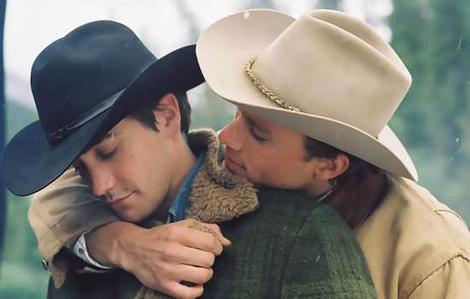
Lauded with accolades the world over, it should have won the 2005 Oscar Best Picture. Ang Lee's powerful portrayal of two closeted cowboys discovering their love for each other in the 1960's west is as big a movie as any of the Hollywood greats, and filled in every way with standout elements - from that amazing score, to the bountiful cinematography, to the gossip-worthy backstories of on-set romance, to the breakout performance by Heath Ledger. And let's not forget that breathtaking ending, when Ennis finally places Jack's shirt over his own, as if hanging in eternal embrace. A classic tearjerker, and though not nearly as politically aware as Milk, it's a film that certainly speaks to all audiences, as the very best of movies do.

A Single Man: Stylish Melancholy


Tom Ford's A Single Man - based on a novel by Christopher Isherwood - opens with scenes of a svelte, naked male body, turning luxuriously, anxiously, underwater. It might be a scene for a cologne commercial, except the body seems less an object of desire than a signal of anxiety. Desirable, yes, but also, perhaps, struggling against death.

The next scene illustrates that feeling more definitely: a car accident on a snowy road. A handsome young man has been thrown out of the car, as has a dog - a black and white terrier. Both appear to be dead. A man walks towards the dead man in the car, slowly leans over, and with tremendous tenderness, he kisses him.

The two scenes establish firmly what is to follow, both narratively and visually. The man who is bending over the dead body is George Falconer (Colin Firth), an English teacher at a small, Southern California college in 1962. The dead body is his lover of sixteen years (an ex marine named Jim, now an architect, who lives with George in their fabulously sparse modern home). And the dog, of course, is their dog. The scene is a dream - a kind of farewell - and when George wakes up, he's still in his life, and mourning terribly. There's also another dog, that's gone missing, but Jim's family (whom he was visiting that fateful night) know nothing about it: nor do they know about George, or wish to.

The dead lover would be sad enough, but somehow, the dead dog makes the scene particularly melancholy...as if to emphases not only the totality of everything George has lost, but the purity of it, as well.

What follows is a test of George's will - his will to live, or not live, with the loss of everything so dear. He goes about his job teaching English at the college, and he takes solace with this close friend from England - a woman named Charlie (Julianne Moore), with whom he slept years ago and who still desires him, and has demons of her own.

But like the opening, the story unfolds with the same slick style and studied pace of the most heightened exploration of culture. Perhaps what amazes me most about the film is that Ford is able to find so many great LA sets of mid-century modernism: not only that great house, but the buildings on campus, a bank, a bar, even Charlie's garishly decorated and quaffed arie. The sets here would give "Mad Men" a run for its money, but Ford doesn't limit his sense of style to the decor...there's also the editing, the use of color and light, everything one might expect from the slickest of commercials.

This strength is also, I'm afraid, the movie's weakness. The technique Ford uses to saturate the color of the film whenever George gets a whiff of the life, or lust, of the world around him - that tempts him to come back to life - is lovely, at first, but eventually overused. The same might be said of certain plot devices, like a gun that George carries around, hoping to find a chance to use on himself. Yet Ford has also captured the stylish introspection of the best of Italian cinema, recreating moments from George's life with Jim with just the right degree of nostalgia and romance (even though, at times, their relationship may be a bit too idealized...one of the hazards of great style), and the scene of his dinner with Charlie, where they both analyze each other's problems over wine and culture, has a breezy authenticity that could come straight of '60's European New Wave cinema.

And even though the movie's ending - which happens suddenly, and carries great symbolism - is unnecessary, even deflating, the film is a great triumph for first-time auteur Ford. It's both sexy and sad, and illustrates with powerful simplicity a committed adult gay marriage, even in the conservative, stylish 1960's, when such a term was rarely applied, or respected. Firth and Moore are both excellent (I wouldn't be surprised if this performance garners Firth an Oscar nomination), as is the supporting cast. It's hard to think of another film like it - that takes a long-term adult gay relationship as a given, and builds from that a story of a completely imagined world. It may be a bit un-polished, but it's still a nice little gem.

Friday, December 26, 2008

Got Milk? Gus Van Sant's "Milk," That Is. If You Haven't, You Should

Gus Van Sant's "Milk" is an amazing movie, and in numerous ways.

The story of Harvey Milk, the "mayor of Castro Street" and icon to the gay rights movement, is not an easy one to put on film (though two directors are trying: Bryan Singer being the other). The story is inherently incendiary, controversial, and potentially maudlin. And Van Sant is a director more known for cool idiosyncratic mood pieces and than hot political protest. So maybe this wonderful film is just the perfect blend of the right material in the hands of the right artist. It certainly is different - and more powerful - than anything Van Sant has done before.

It's hard to take issue with any of Van Sant's choices in the film: from the opening establishment of Harvey finding his first true love in New York's pre-sixties Bohemia, to the cast of characters he assembles around him as he decides to run - five times in a row - to eventually become the Casto's first openly gay elected official in the country, to his machinations on the San Francisco city board and his ultimate unfortunate run in with a too-tightly-wound Dan White. Even the music complements the story perfectly. What Van Sant decides to film here is not just a man's story, but a time and place: the Castro in the sixties, and the energy, excitement, fear, and of a group of people just coming out, just realizing not only who they were but what they could make of their lives, individually and together, and recognizing within each other the makings of an entire community. By the time Harvey utters those inevitable words to the mayor, "imagine that...a gay man with power," you understand how amazing it was for him to have gotten as far as he did.

Needless to say, Van Sant's luck in creating such a success hinges in no small part on Sean Penn's performance. Penn not only disappears behind the character of Harvey Milk, he opens you up to the wonderment and pure joy with which Harvey approached the world. By the time Harvey debates John Briggs - turning the tide of California's anti-gay Proposition 6 from certain passage to a narrow defeat - you realize that so much of what he accomplished hinged on his infectious openness, warmth and humor.

It was this very openness, Van Sant suggests, that discombobulated the classically repressed and resentful Dan White, and finally drove him to murderous rage. But the same openness is what made Harvey an instantly beloved hero, more so than the mere symbolism of his accomplishments.

Milk is the second fully mature gay-themed movie delivered by a Hollywood director at the top of his game. The first, Brokeback Mountain, became a box-office sensation because of its love story, sex-appeal, and cross-over marketing to the ladies. Milk, on the other hand, seems to have little sex-appeal, even less cross-over appeal, and is likely to not reach the same stratospheric heights of cultural relevance. But it is, in the end, the better movie. Brokeback - a movie written, directed, and acted by an almost entirely straight cast - paints the gay experience as an exquisite tragedy. Milk, coming from a completely different sensibility, finds not just honor but meaning in tragedy, and in the end, leaves you feeling not sad, but inspired.

What's hard to believe is that both movies largely take place at the same historical epoch, even if they seem to be coming from vastly different worlds. If Harvey had been out on that ranch with Jack and Ennis, he'd have ended up owning Brokeback mountain, freeing all the sheep, and turning the place into a gay b-and-b, and Jack and Ennis would have been having him over every week for Sunday brunch. And while both movies end with someone dying, in Harvey's death, the world takes notice, and changes.

In terms of how to live their lives, then, Jack and Ennis made their choices, and Harvey made his. And those choices couldn't have been more different. "Milk" does a first-rate job in explaining why Harvey's choices were not only the more brave, but the more romantic as well. While we might have a beautiful cry at Brokeback's story, we have something even more powerful in "Milk": a reason to change the world.