Sunday, December 20, 2009

Brothers: Bringing the War Home

There are two war movies out this season – The Hurt Locker, and Brothers – and really, after watching Brothers, I have to wonder if we, the American people, don’t owe at least one of them a Best Picture Oscar in February. I know that Brothers, at least, should be a contender.

It sounds like an odd thing to say, but the war in Afghanistan is now the longest war in American history – headed into its eight year – and with even more troops headed over in the next two years, it’s remarkable how absent this battle has been from our consciousness, and our popular culture. Sure, it makes a great backdrop for a mindless summer blockbuster like Transformers. But unlike Viet Nam, say, the war has had very little effect on either our counter-culture or our consciousness.

Brothers may seem like the less obvious choice to intro with a paean to American sentimentality or supporting our troops. And it’s true that this drama mostly takes place in the safe, middle-class suburban landscape of the some unidentified western burg (with only about thirty minutes of B footage of Sam Cahill, played by Toby Maguire, serving his rotation through the Taliban-infested mountains of Afghanistan, scattered throughout). But it’s the psychological effect of this war on both the troops and the families at home which this movie wishes to deeply investigate: and that effect, in the end, is one that this movie clearly takes on by focusing both on the ordinary-seeming dynamics Twenty-First Century American middle-class psychology in confrontation with the stark moral choices poised by a serious war of cultures.

Which is to say, Brothers is a movie that sneaks up on you – that at first seems like a fairly by-the-book family drama about two brothers (Sam, the good older brother, who joins the army and does his duty, and Tommy, played by Jake Gyllenhaal, as the opposite: the rascally younger brother, who’s been in jail for assault and robbery and has no respect for his life) – yet it reveals itself, with a somewhat sudden intensity, to be really something else entirely, a movie about how a veteran survives the ravages of a war that our society seems barely prepared to confront.

The set up to the movie in fact almost seems too pat. Sam is a very good brother, wound tight and burdened with high expectations, as well as a family that depends on him, misses him, and has little understanding for what obligates him to return to the war time after time. Tommy is the very bad brother, who snarls at their father, leers at Sam’s lovely wife Grace (played by a suddenly mature Natalie Portman), and generally skulks around, being sultry, sexy and powerful yet not much help to anyone as his brother leaves his family yet one more time. We can see where this set-up is going, and for a good hour, it pretty much does: Sam is tested under fire, and this good brother is headed for a crack-up, while his counterpart at home (his dobbleganger, one might say) begins to clean up his act – headed in the opposite trajectory – and becoming more attractive to Grace, Sam’s loyal but clearly sensual wife.

Jim Sheridan directs these three (along with Sam Shephard, as the father) with a kind of actor’s studio quality – which gets some fine acting and performances from the ensemble, yet also at times feels a bit too informal, as if the crew were about to break character and needed to try another take. In a way, this style forces you a bit out of the story and into the subtleties of the acting, so the informality to the direction may be intentional, even if it seems slightly sloppy at time. In the end, however, Sheridan coaxes some absorbing performances from Maguire and Gyllenhaal. Both are quite remarkable, their performances almost riding above the surface of the film. While we’ve seen such stand-out performance from Gyllenhaal before (his work in Brokeback Mountain was perhaps unfairly eclipsed by Heath Ledger), this is the first real standout acting I’ve seen from Maguire, catapulting him past his Spiderman boyishness and into the realm of truly interesting leading men. Actually, one of the most enjoyable things about this movie is seeing three iconic child actors finally take the stage as our new leading adult thespians (which is no doubt part of the logic in Portman’s decision to produce the movie).

However, about two-thirds into the film, the movie makes a most daring move: it doesn’t just tweak Sam’s wound up nature, it shatters it completely, when Sam, under the pressure of captivity, makes a single decision that will change his life forever. This break is a courageous thing to do in any story – because afterwards, there are so many dangerous shards that need to be picked up for the story to work. Brothers goes through the heavy lifting of picking up those shards, and in the process, becomes much more of a movie than it seemed to be setting out to be.

When Sam returns home, there are so many ways in which this movie could veer into cliché, yet Brothers steers clear of all of them. What we end up getting are a series of about six amazing scenes, including a dinner scene when Sam’s elder daughter, clearly feeling out her own psychological dark depths, says just the precise thing to precipitate the danger that Sam now poses to his family.

All of this is observed with remarkable insight. The well acted setup that has come before is nothing compared to the explosive denouement that awaits, and in the end, we realize that what has been haunting this entire family for generations are the truths of war too terrible to be uttered. Brothers finally utters those truths…and even if you’ve let thoughts of our eight-year war glide past in the background, or buried on some distant news channel, I challenge you to forget this movie easily.

Saturday, November 28, 2009

The Road: Distilled Despair, With A Hope Chaser

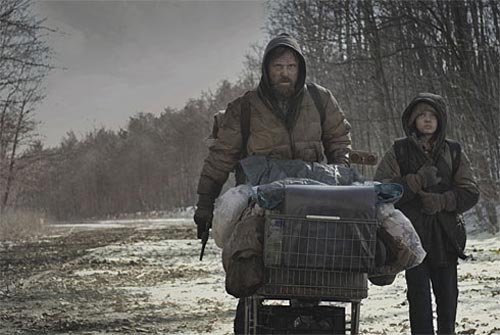
It's as if someone had taken every human moment out of 2012 - Roland Emmerich's apocalyptic disasterfest - and put them into this movie, another end-of-times story, this one penned originally by Cormac McCarthy, which focuses so intensely on how one man and child deal with a world dying by inches at the end of an apocalyptic event, that it lacks even a single CGI disaster scene.

Which isn't to say that the movie doesn't have its own cinematic moments of gray-on-gray beauty: a broken freeway spanning an abyss, a business tower in flames, a mall in destruction. What haunts these scenes are their little familiarities, carefully composed and delicately photographed, as our ordinary world is painted black: a washed out billboard, tilted telephone poles along a residential street, an ATM sign in a vandalized movie theater. But where 2012 gave us an irrepressible orgy of irrelevant specifics, The Road is a lazy, meandering journey of desperate vagueness: we're never told what caused the apocalypse and why only a few survivors remain. All we're told is that if they want to live, they need to be ever vigilant, looking out for scraps of food and wary of bands of ruthless, roving cannibals. Their main asset seems to be stupid luck. And how they got here seems to be irrelevant: whatever's caused this condition of complete despair and has put this father and son on a road of survival is merely the human condition, and our own human failing.

The Road starts us in medias res: a disheveled old man and a young boy wake up in rags along the road; they are obviously running from something in a desolate landscape of burned trees and destroyed cars. Through flashback we're filled in with some of the missing pieces, though not all - the young boy is the man's son, who was born soon after some apocalyptic event destroyed most of the exterior world: killed the animals and vegetation and scorched the earth. The man and his wife lived on scraps, holed up in their home, for several years after - but eventually, as life became too tough, as neighbors turned menacing in their search for what little food remained, the wife decided it was better to leave this world than to continue suffering its cruelties. But the man refused: and now, faced with nothing but evil and despair, he must protect his son from roving bands of cannibals, and try to keep them both alive in a dying world.

That's heady stuff, and this isn't necessarily a film for those looking for some holiday cheer. There isn't far one can go with complete destruction, but McCarthy isn't after the entertaining nihilism of say, a Mad Max movie, or the clever spiritualism of M. Night Shyamalan. Instead, this is a religious metaphor about a test of faith: when everything is stripped from him - not only his own life, but the entirety of humanity - can our hero continue on - does he have the strength not to take his own life? There is even a Hieronymus Bosch-like scene of hell, in the basement of a house (that a man like this should have known better than to enter), where cannibals are keeping their naked captives to gnaw on for supper at their leisure. Meanwhile, the man and his son roam the empty world that's become a kind of purgatory - a mere waiting place between the memory of their former life, and death. (So maybe it is a holiday movie after all?)

This is truly a movie carried by the sets and the acting - both of which are superb, with Vitto Mortensen drawing us into the character from the first few scenes. Most of the movie is spent wandering, simply trying to survive and find food, and the man is haunted by dreams of his former life. The true inheritor of this world, however, is the son, not the man - the son who confesses to his father that it's really he that has to worry about everything. Despite the man's wariness, the son hasn't lost his basic sense of human kindness, and eventually, one realizes that even in this desolate half of a life, the son will be the one to create a new civilization.

It's only when we get to the end of the movie - which is too rushed to fully tie everything together that it's trying to - that we find out where those elements of civilization come from: from the hope of human kindness kept alive inside, even in the most dire of circumstances. The irony is that the father must extinguish his ability to trust, if he's to keep himself and his son alive, even if his son's only hope is to maintain his ability to judge human nature, and know who to trust. At the end, we realize that if only the father had been able to risk trusting someone as well, they might have both been saved.

This movie, which was slated for release last year, and then pushed back, is clearly meant to be Oscar bait. It's a dark horse, to be sure, but what it has going for it is a very Christian moral, laid out simply and starkly. I'm not convinced (the movie does too neat a job delineating between the opposing forces, when I believe the reality would be the dynamics of the shades of gray), but it sure is effective story telling. When I left the theater, even the big men in the audience weren't afraid to admit they'd been crying.

Friday, November 27, 2009

Fantastic Mr. Fox: At Least Fairly Good

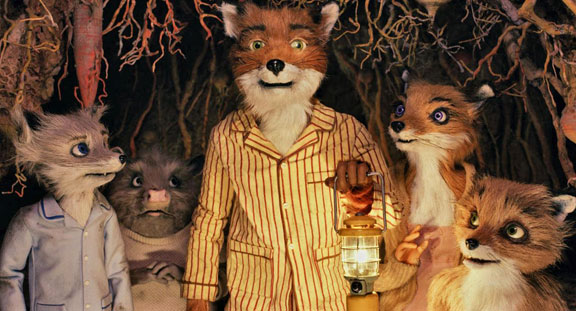
Fantastic Mr. Fox, a stop-animation movie adapted from Roahd Dahl's children's book by unconventional auteur Wes Anderson, tells the story of Mr. Fox, a fox-about-town going through a fairly typical mid-life crisis. Now that his wife is a mom, and they have a pup to raise, he's vowed to settle down and stop the dangerous occupation of chicken snatching: but Mr. Fox yearns for his daring days of old, and to perform just one more glorious caper. Unfortunately, his caper goes up against three of the meanest farmers in the neighborhood: the imposing trio of Boggis, Bunce, and Bean.

This simple story has been rewritten by Anderson to focus, more than the original fable, one thinks, on Anderson's typical obsesssion with the existential despair of small family moments. Hence the character of Christopherson - Mr. Fox's nephew, who comes for an extended visit during Foxy's schradenfreud, becoming a rival to Ash, Mr. Fox's nerdish pup.

Let me say here that I've never been a big fan of Wes Anderson (his movies have never really gelled for me), but in working with Dahl's material, I think he finally here finds his voice - and the merging of eccentric fairy tale with existential family dynamic and the endearing quality of decidedly low-tech stop-animation produces just the right combination of quirky introspection.

The best thing in the film, by far, is the catchflung animation and the whimsical way in which the tale is told. By one small example: in explaining the complexities of the animal sport of Whackbat, a crickety thing with several layers of intricate complexities, we're presented with a non-sensical litany of quick rules performed in a monotone by Owen Wilson, all to comic effect. The joke is even better in the second go-around when Ash spontaneously performs his own real-life (stop-time life, whatever) Whackbat impression while getting his father Foxy and Dad's accomplice Kylie out of a tough life-threatening spot with farmer Bean. Seeing it all done with cute stuffed animals makes it even more entertaining.

By the way, that Bean is a determined sucker who pulls no punches in trying to hunt down Foxy and his hoard of animals. The relentlessness is a bit dark for younger children, but does a good job of capturing the heightened drama of adolescence and its sense of irreversibility. That is to say, I've always found existentialism to be a bit of a juvenile philosophy - lacking the stern conviction of nihilism, the formal rigors of phenomenology, or the literary complexities of a full-blown moral universe. But it does suit well a young mind struggling with the unfairness of life and searching for a reason to enjoy it all anyway. That seems to be the focus of the tale here: as much that Ash discovers his own inner fox despite his father's favoritism for his cousin; as it is Mr. Foxy freeing himself from the stultifying shackles of civilization to re-ignite his youthful, foxy nature. What Anderson is saying, apparently, is if you just stop all that worrying, your sleek animal nature will save the day.

Call it "Old Dogs" meets "New Tricks." Like a kid who wants a good excuse to skip school, the story labors laboriously to explain why rakish irresponsibility is cute, and good for an old fox. Mr. Fox's pontifications on the subject hardly make sense, but never-you-mind: it's really more Wes Anderson's movie than it is Roald Dahl's, which means it's really not at all about being a good husband or father or any kind of believable leader: it's just about growing up an awkward child, being challenged, and overcoming odds. Even the sly Mr. Foxy is just a big kid at heart, eager to be appreciated. I, for one, find the animation and writing thoroughly entertaining most of the way through, so I think this time, the kid deserves his due.

Sunday, November 22, 2009

2012: Emmerich's Apocalypse on Steroids

What, one must ask, does Roland Emmerich have against the world? In his debut blockbuster, Independence Day, he blew up New York, LA, and Washington. Apparently that wasn’t enough, so he topped that with the 2004 disaster flick, Day After Tomorrow, in which a new ice age descends upon North America, freezing the inhabitants and sending the entire population of the U.S. fleeing to Mexico.

Now, he’s decided that decimating a few continents isn’t enough, and this time, it’s the entire world that has to go. In 2012 – which basis its end-of-the-world mythology on the Mayan Long Count calendar, which predicts the end of this “cycle” of time on an upcoming winter solstice of December 21st, 2012 – the end of time is precipitated by hot spots on the sun that somehow send mushy mutating neutrinos into the earth’s core, destabilizing the crust and causing world-wide havoc. If you thought the science of Day After Tomorrow was half-baked, this time Emmerich doesn’t even bother putting it in the oven; we’re essentially given a few lines of cartoon-level excuse for plausible explanation, and then off we go on the usual scientific / government / everyman race to outlive the giant whatever.

This movie has obviously been guided by an invisible studio hand, or at least someone whispering in Emmerich’s ear saying “forget trying to explain why it’s happening, just get to blowing stuff up.” Blowing stuff up is what Emmerich does really well, and it’s truly unfortunate that we have to plod through the entire first act of a way-too-long movie to get to the visual popcorn. No one in this movie – most especially the hero, played by the always cynical seeming John Cusack, a divorced father who discovers that the world’s expiration date is sooner than anyone realizes while taking his kids on a camping trip to Yellowstone – is someone we especially want to root to see survive, but we’re all for seeing more scenes of buildings crashing and national parks exploding.

In fact the scene at Yellowstone, where the North American “cauldron” erupts in what looks like a tremendous atomic explosion, is probably the emotional heart of the film and perhaps the only moment that is based on some actual real science (except, of course, that everyone who survives that episode would have in reality been toast – but that’s a minor point in an Emmerich adventure). This type of possibly-plausible nature unhinging man, and how we would react in the ultimate disaster scenario, is the type of cinematic thrill that we want from our popcorn movies, particularly in a post 9/11 world where our imaginative play about natural disaster seems like another useful form of risk preparedness.

The second act of Emerich’s film – as Cusack and his makeshift family rush to narrowly escape an endless series of disasters of Biblical proportions as they try to find the ships designed to save a few select members of mankind - delivers that adrenaline rush in spades, making it a film that really ought to be seen in a theater, especially in digital projection with the best sound (and fresh popcorn). Unfortunately, the first and third acts don’t live up to the spectacle of the second, and
the sagging on both ends tends to really almost sink this movie (pun intended).

The main problem is that none of these characters are very likable – to the extent that they even bother to depart from stock disaster types. It’s hard to imagine why governments would want to keep the end of the world a secret, but the decision in this film to hide what’s happening to the world, while limiting survivorship to a greedy cabal of the filthy rich and well connected feels both extremely timely, and massively disappointing. I suppose that Cusack is supposed to represent the one everyman who’s able to muscle his way into this super secret sect of rich bastards, but really, he’s not much better (he’s hardly a great dad and has few likable qualities), and in the end, with six billion people being sent to oblivion, one figures that there MUST be more interesting stories to follow than this. The obsession with the super rich begins to feel not like a critique of our cracked and seething present (which perhaps it was mean to be) but rather the opposite: a celebration of political cynicism and a paean to the Darwinian triumph of greed. The fact that some of the super rich may be left behind to die like the rest of us feels more like post-Goldman-Sachs-Great-Recession revenge fantasy than the trenchant moral dilemma that Emmerich hopes to build his wishy-washy third act around.

All of which is to say, the movie wants us to root for all the entirely wrong things, and that leaves me with a profoundly sick feeling in the end. There’s really a problem of scale, here, because when you are telling a story about the destruction of six billion people – neigh, the destruction of the whole of human civilization – there are issues larger to deal with than even a single, puffy, puppy, or the size of the bedrooms on the arc. I care not that the ineffectual President decides to stay behind and buck up the troops (how Richard the Third of him), nor do I care whether or not five thousand completely undeserving and biologically suspect Russian heiresses and Saudi oil barons are going to get saved from oblivion at the last minute. And certainly one must ask why these are these are the only people we have left at the end. One would think that if one wanted to repopulate a ravaged planet, there would be better specimens to do it with than this – where are the beautiful youth, the braniac scientists, the artists and philosophers, or at least the celebrities and NFL athletes? Not that I’m a fan of Eugenics, but just about any other method of selecting survivors –world-wide lottery, race to the finish, a “name that tune” contest – would have produced better results than this. The government doesn’t even bother to save a squadron of highly trained marines, which one would have thought would have surely come in handy in the Flood.

Which is another way of saying that the movie posits the end of the world without any of the cultural context that would have made it interesting – or personally moving and frightening – let alone remotely realistic. There are no reporters telling stories, no attempts at aid and comfort, and aside from a brief phone call between a clarinet player and his son, no review of personal stories of lives in the balance. Instead what we have is this narrow focus on a single man’s series of chase scenes and narrow escapes, while his exit route is manipulated by a secret set of self-absorbed politicians: a mashup of When Worlds Collide with James Bond. The movie really misses a chance to try to be about something more than simply cultural suicide. Like a Bond chase at its most daring, the film has its breath-sucking moments of wonder. But in the end, after all their stupid decisions, ineptitude, arrogance, and bad planning, you hardly think these people even deserve to survive – and given that they’re all that’s left, that’s truly a shame. And it’s sort of sad to see that as Emerich has gotten bigger in the scope of his destruction, his feeling for humanity has gotten smaller.

Tuesday, November 10, 2009

An Education – Learning About Life and Love in 60’s Britain

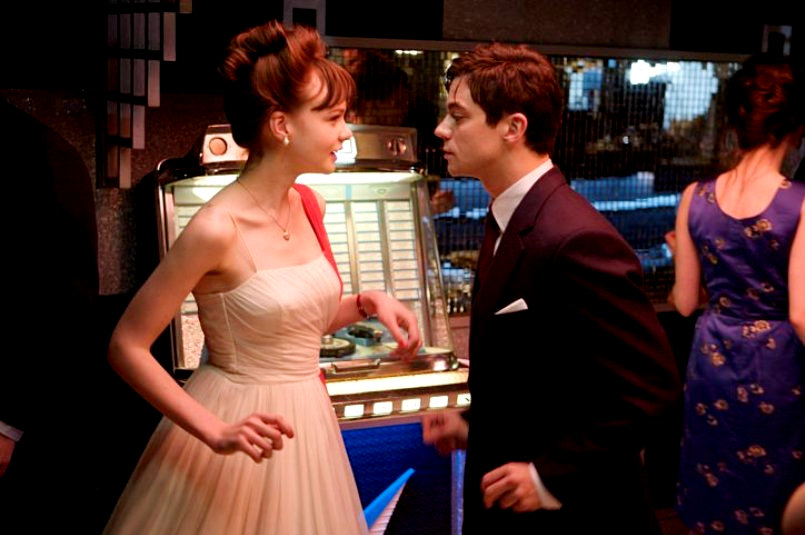
This lovely little movie from director Lone Scherfig and screenwriter Nick Hornby (“About a Boy”) follows the education of Jenny, a smart and charming 16-year-old schoolgirl in Britain in 1961. Jenny’s fatal flaw is that she’s pretty and charming as well as brainy: normally one would say she was blessed with all the gifts, but in the early Sixties in Britain, only two fates can await a girl such as Jenny, and both are equally terrible: marriage, or Oxford.

Jenny’s life is a fairly dull routine of nagging from parents, homework, playing the cello, and English class, when one day a handsome stranger drops in her lap: played by Peter Sarsgaard, David is a suave, Jewish real estate mogul with an answer for everything and a way with enticing people. He manages to entice both Jenny and her parents: first, to let her accompany him to a concert in London (where she meets his friends and confidants, Danny and Helen); later, to a weekend at Oxford (ostensibly to meet CS Lewis, although David knows no such person – and likely never went to Oxford either) – eventually, David sprites Jenny off to a weekend in Paris, all under the rubric of giving the girl a proper worldly education. Naturally, such an education involves both the ways of the flesh as well as, well, the usual: art, wine, classical music, dog races, sports cars, sarcastic banter, and casual thievery.

Everyone falls for David, it seems, except the dour women who work at Jenny’s school, who are charged with maintaining the moral standards that will produce proper English women: Jenny’s English teacher, a Cambridge girl herself, who’s set her hopes on Jenny, as well as her headmistress, played with sturdy severity by Emma Thomson, who believes that rakes like David are on earth for one purpose only: to lead girls of dubious morals like Jenny down the road to inevitable damnation and ruin.

Films of quiet coming-of-age like this live and die by the characters and dialogue, and this is what makes An Education such a treasure. Carey Mulligan, who plays Jenny (keep an eye out for her in the upcoming Wall Street 2), imbues the character with the rare combination of charm, naiveté, and fashionable wit that all works quite well to enthrall us with the young girl. Jenny is such a bright and beautiful thing that we are endlessly fascinated watching her interact with her friends, her parents, and her ostensible fiancé and his friends. She never misses just the right observation and has the appropriate thirst for life. The movie purportedly is about the charms of David, but it’s Jenny who charms the audience and carries us through the film.

The rest of the cast is also quite marvelous – including Alfred Molina as Jenny’s father, a bit of a hard-case shut in who cares terribly for his daughter but has trouble finding the right way to show it; Emma Thomson, of course, in that star turn as headmistress: she sees all too clearly where Jenny is headed, and has little sympathy for the girl. But Rosamund Pike, who plays a supporting role as the girlfriend of David’s friend Danny, is also equally essential in this film (you may remember her as the icy double agent Miranda Frost in Die Another Day). She’s Jenny’s foil – a woman who’s thoroughly followed these rogues down the garden path – and her lack of education and sardonic attitude is quite perfect. She brings a million beautiful different bemused expressions, always giving us just the right delicious punctuation to the points of life that Jenny is learning.

My only quibble with the movie is that the ending to which Jenny and David is headed seems to me, well, a bit too pat: the lesson Jenny learns from David is really rather thorough, and all a bit too neatly tied up. One might argue, as well, that the film’s essentially conservative message – that good girls don’t mess around and instead save themselves for Oxford – feels, as well, a little bit one-sided. Clearly, Jenny’s generation is on the verge of an entire revolution, and in a few short years, Jenny’s London would become Swinging London of lore, and her merry band of rogues would in fact seem a bit quaint.

But this is 1961, and the movie does capture that time of transition well – as it does Jenny’s youth. Jenny, like many of us, has her first encounter with someone who has the power to completely determine the future course of her entire life. That encounter is always a powerful lesson, and a key moment of any young person’s life that the movie captures with care and feeling. The scene when Jenny’s father talks to her through the door – admitting that he knew all along that David was lying about CS Lewis, but that he trusted his daughter more – is staged perfectly, and played with just the right insight and drama. If it does nothing else, the enjoyable film reminds us of how much even the smartest teenager has to learn.

Saturday, October 31, 2009

Amelia: Celebrity Pilot Celebrated Obsequiously

There's something off about Mira Nair's sumptuously lugubrious tribute to Amelia Earhart, and it's apparent within the first few minutes of what really amounts to a nature film: we aren't going to learn a single new thing about the famous female pilot, notorious for her disappearance over the Pacific during an ill-advised round-the-world flight. Instead, we're in store for a slavish tribute film, all sepia and gold and weighted with studied authenticity and poetic flights of seagulls.

Sigh. I don't know about you, but if I were in the mood for this sort of fare, I'd take a Xanax and watch the Hallmark channel.

That may sound harsh, but the movie is a disappointment when you think about what could have been learned about Earhart's lifelong quest for celebrity and a woman's right to pilot the wide-open skies. Instead, all obstacles against her seem like mild plot points, meant to pass the time until the next luscious airborne nature shot. In the flight that makes her famous - the "first woman to fly across the Atlantic" - Earhart doesn't actually fly the plane, but simply goes along as a passenger (though she has an opinion or two about how to get off the ground). It's a promising setup: is this woman, who prides herself on her abilities, passing herself off to the world as a fake? But the question never seems to truly bother her (other than to give her motivation to do it again, for real this time)...and we're never given much insight as to why. Similarly, her husband, George Putnam (played by Richard Gere) gets portrayed as a suffering, saintly milquetoast, at first hungry to make Amelia a star but soon plying us with his earnest love for her while she has a perfectly understandable affair with the handsome head of aviation, Gene Vidal (played with ever-smiling insouciance by Ewan McGreagor). Somehow, one can't help but think that real life - let alone the life of the world's most famous female celebrity and feminist heroine - must be more complicated than this, and that emotions are never quite so one dimensional as to be so easily transformed for the convenience of the next adventure.

That isn't to say that Swank doesn't do a great job capturing Earhart's cadence and manner. Swank does, in fact, quite disappear into the role - don't be surprised if she doesn't earn an Academy nod for it this season. But her almost flawless performance, stuck as it is in the middle of this bloodless story, has the characteristics of still water: deep, dark, and practically invisible in the mist.

The movie really misses its best opportunity for drama when it gets to the depiction of the most famous part of Earhart's life: those last few hours as she departed New Guinea in her plane the Electra, headed for a tiny atol in the Pacific for refueling, before she and her navigator, Fred Noonan, disappeared forever. Rumor has it that Noonan was an alcoholic, and that the flight from New Guinea left with poor planning, not enough fuel and other problems. Given the danger of the flight and Earhart's otherwise professional attitude, there has always been much speculation about what happened when that plane left New Guinea and just how it disappeared before reaching its destination in the Pacific. But rather than go to the trouble of unearthing new facts, or even taking the chance of offering us a clearly fabricated but fascinating explanation (as, say, Oliver Stone might), Nair gives us an uneventful catalog of bad coincidences and timing. Nothing in the ultimate fate of the Electra tells us anything more about Earhart's character, her decisions, or even the meaning of her life (other than the standard spiel we get from Eleanor Roosevelt that she's an inspiration to women everywhere). While all this may, in fact, be the simple existential fate of this poor pilot, Nair isn't going for existentialism, either. Instead, the lack of meaning seems like simply an oversight: we're supposed to simply exalt in Earhart's courage at facing down the impossible, not wonder what drove her to it, or caused her to ultimately fail.

Watching this movie, then, is a bit of an exercise in frustration. The cinematography is beautiful, and Swank convinces us that we're really watching Earhart, and really seeing the magic of the skies that she was able to see. At the same time, in the end, the film feels like nothing more than a travelogue of her trips. But just like Earhart - if we're going to circumnavigate the world, we want to do more than simply go along for the ride.

Thursday, October 22, 2009

A Serious Man: Coen Brothers Get Seriously Good


Sometimes, movies based on a mathematical metaphor can get a bit too pat. In the hands of the Coen Brothers, however, there’s little worry – these boys are originals, and even the slickest “Big Bang Theory” physics set-up is handled with foreboding, mystery and style. It may seem at first that with this movie, and its focus on a nerdy, Jewish physics professor (and even a cast-member from "Big Bang"), the Coen Brothers have decided to capitalize on the success of Chuck Lourie’s up-and-coming sit-com about four science nerds (two of them Jewish) living at Standford, one of whom is dating a gorgeous blonde. But this film is about something much more than dorm-room dorks: at once more serious, as well as more darkly comic.

Lawrence Grupnick, the serious man and Jewish physicist in question, lives in the flat Midwestern landscape of 1967. I seriously relate to this man: he is, for all practical purposes, my father (which puts me in the position of Grupnick’s son, a Jefferson-Airplane listening Hebrew-School delinquent who is also a stand-in for the filmmakers). We children of second-generation Midwestern Jews who assiduously provided for their careers and families know exactly what Grupnick is going through: torn between the placid traditions of his parent’s faith, and the “new freedoms” of an America filled with cultures of all types (and people all around him taking advantage of such freedoms), this generation has to face modern troubles and heartbreak of divorce, drugs, and cultural integration for the first time. But with only their parent’s ancient culture to provide them with an inconclusive moral guidance, which seems impossible to translate to the modern condition, the immensity of their choices is nearly unbearable.

But back to the physics. When we first meet Lawrence, he’s explaining to his class the Schrodinger principal of uncertainty, and the story of Schroedinger’s cat. It’s the classic example of modern physics: The cat is in a box bombarded with one of Schroedinger’s modern uncertain particles. The particle is both in an “up” and a “down” state, until it’s observed. If the particle is “up,” it kills the cat. If not, the cat lives. So is the cat alive or dead? There’s no way to tell until you open the box. Or rather, the cat is NEITHER alive or dead, and your opening the box either kills it, or lets it live. That is: all is indeterminate, until you perceive it.

In response to Schrodinger’s idea that the grounding of reality was simply chance determined by our own particular efforts to observe, Einstein famously said, “God does not play dice with the universe.” This theorem of modern chance and perspective, however, is the central metaphor of the movie, and the Coen brothers proceed to set up a number of delicious Schrodinger experiments for Lawrence (including a beautifully directed pair of car accidents). Lawrence’s first test comes in the form of a Korean student who wishes to protest a failing grade. After the student leaves the office, Lawrence finds an envelope of money. He confronts the student. Did he leave that money as a bribe? How dare he accuse him, the student claims in his broken English. Such an accusation is defamation, and his father will sue. So he didn’t leave the money, Lawrence asks. Is grade passing, student queries back. I can’t change a grade, says Lawrence. Then it is mystery, the student replies.

A delicious scene of impossible choice is actually also how the movie opens: with a flashback to the old country in Prussia, and Lawrence’s ancestors. It’s a small bubba meissa (grandmother story) told in Yiddish. The husband invites a neighbor over for a drink after the neighbor helps him fix his cart. After he tells his wife about the visitor, the wife claims that the neighbor died three years ago, and the person the husband has invited is a dybbuck, an evil spirit. The husband protests, but then the neighbor is at the door. The wife pleads not to let him in, but he does. As the wife queries the visitor about his past (was he sick, did he die?) she decides to stab him with a kitchen knife to prove her case. He doesn’t die right away, but instead, staggers back out into the cold. Was he an evil spirit, as the wife claimed, or a real person who they’d just killed, in traditional Coen brothers way? That question now haunts Lawrence and his modern generation. How much of the wisdom of the old country is mere superstition, able to leave you nothing but dead…and how much is genuine wisdom, keeping at bay the evil of the world? Impossible to tell. It is mystery.

It’s at this time, when these stories start to come together, that you realize that the Coen’s are after something great and rare in film: a serious exploration of the presence of God in the world, the failing of traditional religion to leave modern Americans with a useful moral roadmap, and the ultimate meaning of life. I don’t mean “meaning of life” in a jokey, Hitchhiker’s Guide sort of way. I mean that the boys here are really going after the great existential questions: Is there a god, do our choices have meaning, how do we deal with life’s questions and tragedies? The last time a filmmaker went so deeply into these issues, and did it with a similar lighthearted, darkly comic touch, was Woody Allen’s Crimes and Misdemeanors. That was twenty years ago, and in combining the seriousness of a movie like No Country for Old Men with the deliciously ironic humor of a film like Hudsucker Proxy or Burn After Reading – but all with a bit more warmth for the characters – the brothers have produced probably their most integrated, if not their finest, work.

They’ve certainly learned a lot from filming the darkness of McCormack’s novel, and bringing that sense of foreboding evil into the ordinariness of the most ordinary: the middle-class Midwestern life. Every choice that Lawrence makes seems poised to bring down God’s judgment – and like Anton Chigurh, the assassin in Old Men, this is clearly the Old Testament god of wrath that Lawrence must contend with. It’s no coincidence that while going to erase that student’s F, Lawrence receives an ominous call from his doctor: or that the simple act of erasing a letter (letters, Hebrew, and numerology play a big role in this movie) is contrasted with the more literal potential erasing of a tornado barreling down upon a school playground. That last scene of the film: God’s wrath in the form of a tornado, and the American flag flapping weakly in the face of it, seems an odd and mysterious way to end the movie at first, but symbolically, couldn’t carry more weight. That tornado is Lawrence’s Old-Testament God, coming to pass judgment, and the even the new American freedoms tremble in the face of it.

Those freedoms are clearly exemplified in the central issue Lawrence must face: the fidelity of his wife, and how, as a man, he should care for his family (who does not seem to have much care for him). His wife not only tells him she wants a divorce – or a “get,” to use the traditional Hebrew, which many of Lawrence’s friends have humorous trouble contextualizing, at first – she adds insult to injury by asking Lawrence to befriend the man who is cuckolding him. The ensuing scenes of emasculation and Lawrence’s weakness in the face of it tip him dangerously close to a character with whom we have no sympathies. But Lawrence wins us back with his quest for guidance, framed as his attempt to visit three rabbis through the three major story acts: first the young rabbi, who carries no weight with him (but imparts perhaps the best advice Lawrence gets: that everything is perspective. Look at the parking lot, the rabbi says – and the parking lot, indeed, is where God finally appears). Then the older rabbi, whose stories about goyish teeth inscribed with Hebrew letters are just a tantalizing, seemingly meaningless mystery (but quite humorously told). Then finally – the oldest rabbi of all – the great Mishna – who won’t even see Lawrence, but who has a clear moral for his son: be a good boy. So it is that tradition is what we need, even if it has no real relevance any more, except to make us feel guilty. Perhaps the funniest moment of the movie – for me – comes when Lawrence’s son – a stoned bar-mitzvah boy – actually finds the wherewithal to read the Torah correctly. The Coen’s direct the scene as if the nachas generated by that simple act is a literal Big Bang: it seems to wash over the assembled audience and repair, in an instant, every transgression and everything that has gone wrong with Lawrence’s family (and every boy who’s gone through the bar mitzvah ritual will surely understand that joke).

The truth of these scenes, and the accuracy with which the Coens portray the Midwestern Jewish community, couldn’t be more heartfelt, and really, it’s a movie that many Midwesterners – Jewish, Catholic, or otherwise – will find familiar. Woody Allen’s brash New York Jews are fun, but they have nothing on the suppressed neuroses of my Midwestern roots, and this is really the first film I’ve ever seen that hits so close to home.

That the Coens are able to create such a rich texture of metaphor and culture – without much ever happening in the film (there’re a couple of untimely deaths, a few breasts, some minor crimes, a neighborly seduction, and an imagined murder) – gives this movie more of the feeling of really great literature, more than the early goofy Coen oeuvre. Which is to say, the movie may not be for everyone, but will bear fruit for the patient cinemaphile. Some people may be uncomfortable with the simple existential questions posed by that awesome and abrupt ending: has Lawrence really resolved things with his wife? With his job? With his health? And where exactly is that tornado headed, and for whom? These things seem to be left in God’s hands – or else, in the hands of random chance. Either way, like life itself, it is mystery.

Wednesday, October 7, 2009

Surrogates: Substituting B-Movie Plots for Story Telling


There seems to be a rash of movies lately about the oh-so-1990’s subject of virtual reality, or what this latest sci-fi film starring Bruce Willis as a future cop on the trail of a virtual reality killer, calls “Surrogates.” You know: plug into a substitute idealized android body that you control remotely with some fancy looking VR goggles and easy chair. The much awaited James Cameron sci-fi thriller, Avatar, also uses this same plot device, as does the recent Gamer (only in the case of Gamer, the androids were real, living convicts). The same idea is as old as the original "Star Trek" (the Harry Mudd episode with the Androids) and was given real attention in TV shows like "Wild Palms" and movies like Johnny Mnemonic and Virtuosity in the mid Nineties.

I’m not quite sure why this old sci-fi trope is suddenly so popular again. As it’s done in Surrogates, it definitely has a William Gibson, 1990’s feel – especially as this film delves into our pension for electronic communication and fascination with artificial reality. Like most of these films, the moral is simple: we're now so plugged in to the “net” that we've lost our ability to enjoy real life. But this time, the VR “chairs” and “goggles” used in this film seem hardly at all re-imagined from their 1990’s counterparts, and the story does little to update a theme that’s been well exploited ever since Jean Baudrillard wrote his treatises on hyperreality and movies like The Matrix turned the net into a well dramatized metaphor for modern electronic isolation.

In Surrogates, we have a kind of cross between I Robot and The Matrix – a vast volunteer matrix of metallic, human-looking artificial life forms that people can control remotely from the lazy comfort of their living rooms as they send younger, handsomer robotic look-alikes to work, play, and generally participate daily life for them. The robots are manufactured by, of course, an all-powerful corporation with vested interests and internal dissention. Life is seemingly sweet in this safe, accident-free virtual world until someone discovers a weapon able to short out a robot with enough power that it can kill its remote operator in his chair (it does so by “melting his brain,” just to make sure you get the point).

Enter Bruce Willis as Tom Greer, the cop with personal issues who’s assigned to track down the mystery of the killer. Now Surrogates borrows from its third major source – Majority Report – as the cop with a dead son gets lured into uncovering the conspiracy behind the killings, while simultaneously having to stop a deadly threat to the billions of surrogate users around the world.

While the set up to the concept is nicely done – there’s a kind of Paul Verhoeven style to the direction that tweaks our modern corporate sensibilities – the back stories about the dead son and the mysterious corporate founder fail to resonate as well as the movies they’re borrowed from. (James Cromwell even stars as the corporate font head, as he did in I Robot.) We get a kind of promising political allegory in the form of a revolutionary named The Prophet, who wants everyone to go back to the “unplugged” pre-surrogate lifestyle – a charismatic rabble-rouser whose moral righteousness in this film is the flip side of the villainous Flesh Fair organizers in Speilberg’s AI. But this interesting wrinkle in the plot is conveniently smoothed over in an effort to get to the movie’s more conventional pat ending. In effect, they seem to have substituted real writers with Hollywood surrogates who merely borrowed plot devices to fill in the steps in their fantasy.

It’s a shame, because a movie with a promising concept ends up delivering less than a TV show with a similar concept ("Caprica", based on "Battlestar Gallactica"), but more atmospheric character and backstory development. Really, the makers of Surrogates could have done better by committing more to one of to extremes – either a bigger budget, with better chase scenes, special effects, and explosions, or keep it to the B-movie budget they seem to have had, but develop more nuanced characters, and explore with a bit more care the themes of disconnection and loss. Instead, we get a movie about a people who live but a shadow of their lives, which is itself but a shadow of a movie.

Saturday, October 3, 2009

Michael Moore's Capitalism: More Agit-Prop Than Love Story

But is that really so bad? In an age where corporations and governments have become their own slick propaganda machines, maybe Moore's project - being a carnivalist entertainer for the common man - is what those who study leftist art would call purposeful propaganda, art in service of a populist political message. It strikes me that having a propaganda machine like Moore fighting back for the workers is only...well, to use one of Moore's own overtly latent terms..."fair."

After refining his approach for over two decades: telling sob stories of workers crushed under the wheels of cruel corporations and government, while mugging and embarrassing the lugs who run them, all the while mixing in a Raffenstahllish montage of found footage and Dada-ist deconstruction intending to highlight the contradictions and absurdities of the enemy, Moore has become a master of the style...a style, at this point, ripe for a Saturday Night Live parody. But that's another story.

In Capitalism: A Love Story Moore, in a way, decides to go for broke - instead of simply tackling a particular leftist issue (such as failed intelligence of Fahrenheit 9/11 or the medical system in Sicko), he's decided to set his sights on the whole shebang, basically indicting the entire American "Capitalist" way of life.

What Moore spends most of his time on here is a heart-wrenching deconstruction of the mortgage-cum-banking-cum-bailout crisis of the past year; and when Moore sticks to his subject - such as interviewing a farm family loosing their house, following fired workers as they sit-in for the pay still owed them, or following neighborhood activists as they battle local police from evicting families, he's got his teeth into a subject that surely resonates with the times. His point that maybe this time, Americans who usually vote against their interests will get mad enough to do something about it, starts to feel like a movement in the making. And by tying back the moments in the news with his own personal family story of growing up in Flint, Michigan, Moore succeeds in making himself not just a strident spokesman, but another one of the families who've ended up on the losing side of the Republican revolution: and thus a voice we're more inclined to follow.

But in going for broke, Moore overreaches - throwing in unrelated stories about the corporate practice of taking out life insurance on young workers (known as "dead peasant" insurance); charting the Congressional vote for the bailout without examining the alternatives, and basically letting everyone off the hook for our fiscal mess - including not only those homeowners who bought into the refi-mania of the 'naughts, or who abandoned their homes when the payments got tough, thus fanning the flames of the crisis, but also favorite Democrats like Clinton and Obama - who don't neatly fit into his "us versus them" meme. This time, Moore wants to disparage the entire Capitalist system as, in his words, "evil" - to be replaced by...well, that word Socialism seems to be the alternative on offer, though Moore does little to explain it (and seems to intentionally avoid uttering the word). I grant you, it's not a far leap from our current fiscal mess to concluding that this whole Capitalist project is a dud. Yet Socialism is hardly a rejection of capitalism (Moore seems to buy into the Republican line, here), so what is it that he's really arguing for? Moore clearly cares little about such niceties as making sense - which makes his point here a bit of a mess. Moore, as we know, doesn't want to convince: he wants to break your heart, then hit you over the head with his assertions. But it's not just that the realities are more complicated than Moore would wish them to be, it's that this time, by aiming at an entire economic system, instead of just a particular crisis or two, his buckshot rarely hits the intended targets, and instead of the righteous anger he's going for all we emerge with is a sad shaking of the head, not just at the misery caused by the banking crisis but at the deep, deep misunderstanding of it that even lucid commentators like Michael Moore seem to have.

So my complaint about Moore's movie this time isn't that he's gone and done it again - rather, it's that he's missed an opportunity. There is plenty of blame to throw around in this mortgage/bailout mess - Moore bags a politician or two (Chris Dodd comes out looking less than pretty); and he nails the Goldman Sachs/Government conspiracy previously written about by Matt Tiabi. And it's worth being reminded that there are real lives being destroyed by this debacle. But what Moore leaves out is even more telling: little mention that Obama's cabinet is, surprise surprise, more of the same, or that it was Clinton who signed the bank deregulation bill, or - even more complicating - that the anti-AIG anger has now morphed into the anti-Obama, anti-government Tea Party movement, who has concluded just the opposite point: that it's not Capitalists who are evil, but Socialists. Perhaps these oversights are all part of Moore's strategic plan to get labor-leaning pols into higher office (Roosevelt is practically canonized at the end of the film). But the long passage on Reagan's war against the unions in the Eighties really feels like a stretch, and starts to betray Moore's real passion in this film: organized labor, and its ability to fight for worker's interests.

That's a worthy goal, and perhaps one worth fighting for, but really, it's tangential to the mortgage meltdown and the financial bailout. Then again, what Moore wants to do is achieve his dreamed-for worker's revolution, and in his mind, the bailout/meltdown is merely the spark he hopes will get the Peasants to rise. That's perhaps why it's more important for him to show angry AIG protesters and clear-cut enemies like Hank Paulson, than to really reveal the nuances of what just happened.

It's too bad, because I think a political propagandist like Moore, if he really focused in on the financial mess, could have helped do for banking reform and regulation what a movie like "Sicko" has apparently done for the health care reform initiative. This time, Moore takes aim at the entire capitalist edifice, trotting out his most strident and vague Troskyist anthems, and instead of launching a roar that has the potential to create a movement, all he gives us is a cris de cour: the yelp of a dog who's had his tail caught, and plaintive though he may be, seems to have lost his bite.

Monday, September 28, 2009

The Informant! Promises More Than He Delivers


That's the basic premise of Steven Soderbergh's latest film about an unstable, pathologically lying Archer Daniel's Midland executive who turns informant for the FBI, staring a corn-fed Matt Damon as the chunky executive who turns undercover agent on big Agri-business.

Soderbergh seems to be going for a film in the style of the breezy, kooky fun cops and robbers escapade that Speilberg did brilliantly with Leonardo di Caprio in Catch Me If You Can. He gives the film a fun, Seventy's font styling (even though it's mostly set in the mid-Nineties) and creates a similar exasperated cop (Scott Bacula of Enterprise fame) running the exasperating Damon as Mark Whitacre, a kind of introverted scientific genius and executive big-wig who has absolutely zero social intelligence but finds himself the center of international intrigue.

When Mark reports to his boss (Tom Papa doing a great job as ADM favored son Mick Andreas) that a mole in the company is poisoning the promising lysine-generating bugs in their grain silos and extorting ADM for a payout to uncover the mole, Andreas brings in the FBI, much to Mark's dismay (the poisoning story, we later find out, was just a ploy to deflect Mark's own failure with the bugs - but anyone with two sticks of wood to rub together can tell that Mark is one suspicious cookie). Mark quickly enlists the FBI into the intrigue of a greater scheme - international price fixing in the agri-business industry - and offers his services to help them create a series of tapes to make their case. Again, just how much of this is tall tale designed to extricate Mark from an uncomfortable situation is anyone's guess, but he does manage to get the FBI dudes to fall for it, and off we go.

Damon's Whitacre turns out to be a bit of a dunce when it comes to stealthiness, talking about the case with colleagues, showing his taping equipment to neighbors, and generally acting like a two-penny lout. Turns out that Whitacre isn't the shiniest penny in the bank, especially when push comes to shove and it turns out that ADM is wise to his antics.

Though the style of this sort of thing generally tends to be congenial and enjoyable (nine years in the poky is just a lark in movies like this), this effort just doesn't gel for me for a number of reasons: Damon's voice over, where he recites random thoughts in the middle of tense scenes that could make the top 20 of the ADD all-time-hits list, is continually distracting. In fact, Damon and Bakula both seem miscast - too "on-the-nose," as it were (one wonders if reversing the casting might have been more promising). By the end of uncovering the endless pathology that seems to be Mark Whitacre, we're no further along in sympathizing with the guy - and in fact, we kind of wish to get rid of him all together. This is the classic intentional fallacy, where the movie becomes obstreperous and boring when it's only the character that's supposed to be.

That's not to say that the audience didn't enjoy this type of acerbic humor, which I believe some certainly did. But Soderbergh has woefully under imagined this story, trapping it in a dull limbo between Fargo and Catch Me, but without either the menace or the thrill that either of those two movies supplied. Instead, we have a kind of lightweight Ocean's One, and one, as we know, is the loneliest number.

Perhaps the problem is that it's too early for the mid-Nineties to generate the kind of stylish bravado that Soderbergh is able to get out of his re-imagined fifties brat-pack, or Speilberg was able to mine with the mid-Sixties jet set. The main promise in this movie lies in dissecting the bi-polar insanities of farmland niceness and corporate culture: the intersection between paranoid small-town stability and the desire for greatness that leads one to perform great crimes against humanity and oneself. Soderbergh here has all the ingredients for such a film - he just doesn't have the temperament for it. Instead, we get a lightweight, aimless comedy that feels like water-downed Cohen brothers. It's a harmless enough thing to rent on date night. And if a fat Matt Damon is your thing, you might get a thrill. But Soderbergh can do better. This film only delivers a half Whitacre.

Thursday, September 17, 2009

Tim Burton’s 9: Dystopian Modern Art With Heart


A few months ago I went up to the Massachusetts Museum of Contemporary Art, in North Adams, Massachusetts (Mass MOCA as it’s called). I love this museum, which always has some of the most nuanced and interesting contemporary artists exhibiting today, artists deeply influenced by movements such as deconstruction and postmodernism, yet who have often moved beyond those intellectual gestures to also create objects of formal beauty, electronic wonder, genuine feeling and humanity. This last visit, at the “Badlands” exhibit, there was an interesting diorama depicting scenes of desolation, with in the far distance, tiny human figures swallowed up by the destruction. The work was both serene and disturbing, dark shapes brightly lit from behind like a planetarium, yet suggestive of the massive pain and suffering of war.

Such is the feeling I get from Tim Burton’s recent post-apocalyptic cartoon, 9, directed by relative newcomer Shane Acker (and co-produced by Burton). The look of the film has the same Burtonesque exaggeration as his earlier work – movies like The Nightmare Before Christmas or Edward Scissorhands. Yet this film is at once more serious and more light – a kind of fairy tale of about human destruction and human spirit. It’s hard not to be both moved by this work and to find it deeply suggestive and artistic.

The movie starts in-medias-res – a technique that I sometimes find jarring, but works quite well here since when 9, a kind of sock puppet imbued with human life, wakes up, thrown into a world of destruction and danger, he has no idea how he’s come to be and what’s come before, and neither do we.

The movie is both an exploration of 9’s origins as well as, of course, a battle with an evil robot holding lord over the apocalyptic ruins, a nasty piece of spidery belching machinery that looks suspiciously similar to the round, indestructible iron baddie in The Incredibles. The artistic panorama here is a bit more finely nuanced than The Incredibles, though – not CGI but carefully arted backgrounds, hued in acid green, faded khaki, shades of black, and fiery red, reminiscent of a cross between the drawings in Coraline and World War I cinematography. The visual work in this film is truly incredible and had it not been a major motion picture, stills from this movie could have hung in Mass MOCA and been right at home.

What’s most enjoyable about the film, though, is the exploration of human character represented by the sock puppets. There are indeed nine of them, each with its own distinct character, and each, presumably, created in a significant order from 1 to 9: each one an incomplete attempt, it seems, to capture the human spirit necessary to defeat evil. Naturally, 9’s destiny is to have the necessary spunk and spirit to compel the others to rally to the task. But the other puppets each have their interesting significant place, as well – including 1, the leader who feels he must protect the others at all costs, 7, the courageous warrior, 6, the compulsive who secretly deduces the answers, and 5, the loyal friend. At a mere 1 hour and 20 minutes, it’s not an involved story or a convoluted plot, yet its very simplicity is what makes this a fine film.

As a somewhat scary bedtime story for kids, then, the film has an uplifting moral about loyalty, courage, and camaraderie that any parent would want their child to understand. There is a repeated gesture throughout the film where one of the sock puppet characters will put their arms around another – a gesture of intimacy, friendship, and humanity. Yet that gesture comes to mean so much more: a longed-for human connection that sustains us in even the darkest of times. For adults, the film may recycle the simplistic tropes of science-fiction cartoons: evil robots and mad scientists, assembling a movie from bits of cloth and string and borrowed movie scenes. But there’s no doubt that this fine movie isn’t also a moving portrait of the human spirit, and yes, a finely crafted work of art.

Monday, September 7, 2009

Extract Delivers Little Juice

Mike Judge, creator of such TV wonders as "Bevis and Butthead" and "King of the Hill," has taken to the big screen once again with the comedy Extract, which stars Jason Bateman as Joel, a successful small business owner, making flavored extracts with his hired assembly line of hicks, losers, immigrants, and complainers.

I wish I could say this movie was better than it is. Bateman is a sincere actor who often brings an air of refreshing reality to his performances. The movie is supported by SNL's Kristin Wiig as Bateman's wife, Ben Affleck as his best bud, and the ever entertaining J.K. Simmons (of Spiderman and "The Closer" fame) as his plant manager and business partner, yet despite the nice casting, it never gets off the ground.

Judge's film centers on the shenanigans of a female drifter and knock-out, Cindy (played by Mila Kunis, the "other girl" in Forgetting Sarah Marshal). We are given a demonstration of how Cindy's way with men allows her to perpetuate all sorts of small-time scams; and then Cindy thinks she's hit the big time when she reads about a testicular accident (don't ask) at Joel's plant, and sets her sights on scamming Joel. Meanwhile, as Joel becomes more infatuated with Cindy, he turns to his bud Brad for advice, who insists that he hire a brainless gigolo, Brad, to sleep with his wife so that he'll feel less guilty about wanting to get it on with Cindy.

It's hard to believe that a successful business owner heading into his forties - let alone one played with the kind of beleaguered sincerity Bateman typically brings to his performances - would engage in the kind of teenage juvenalia of this Cindy/Brad/Ben Affleck triangle dictates. The young and handsome Brad is essentially a good-looking Beavis to counter Joel's grown-up Butthead. But the forty-year-old Beavis and Butthead thing just seems rather charmless to me. I'd tell these characters to grow up if it weren't that Joel was already so serious about everything to begin with.

Meanwhile, Cindy gets her claws into one of Joel's employees and threatens to bring Joel's life crashing down with a frivolous lawsuit. Gene Simmons breaths a bit of life into the story as the greasy lawyer trying to shake down Joel and his partner. But it's just not enough to sustain a script that's filled with routine gags like a nosey neighbor, snooty assembly line workers, and a married sex life deadened by eight-o'clock sweat pants.

The film would like to turn the fear of turning forty, and the fear of success, into a black comedy of errors. It simply isn't black enough or comedic enough. Perhaps it goes wrong in trying to mix the "King of the Hill" culture of hicks and losers with a grown-up successful Butthead who's only issue seems to be that he needs more private time to whack it. The directing feels very TV-like and we're given only modest inconveniences for Joel to contend with. If Joel was really frightened by his life, he'd be looking for a lot more trouble than this silly Cindy and stupid Brad represents. Judge just doesn't seem to be the right person to try to tackle this subject matter. Success, it seems, is really not his forte.